Problems With Roomates and Design Solutions

roommates

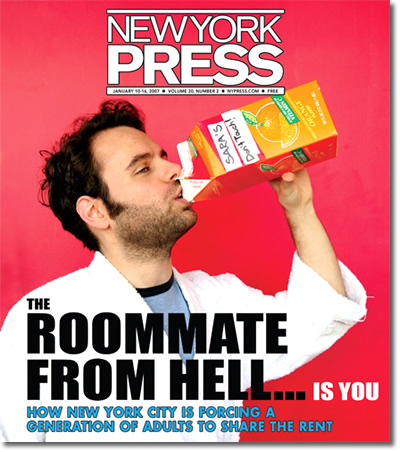
PMI did a focus group with its millennial workforce to further its research in how to best design apartments for the young tech workforce who may have roommates.  PMI is under production with a four bedroom apartment designed for roommates in Silver Lake. The five main take away critiques and improvements from PMI’s millennials are outlined below.

1. Neat versus messy. A big problem is who does what chores and when. It is the old Odd Fellow problem. Oscar may not mind the unit being messy with the plates unwashed, while Felix may want the unit always to be neat. One solution to this would be mandatory maid service once a week and incorporate the cost in the rent.  Most likely, landlords will just let roommates continue to settle this issue among themselves.

2. Whose stuff is in the refrigerator? Roommates have food storage problems.  Whether it be in a designated cabinet or shelf in the refrigerator, this is a hot button topic.  Clear boundaries need to be expressed, because food can become a health issue if not taken care of.  Sometimes, a roommate may borrow some food without asking, leave their food in the refrigerator past the expiration date, or carry their mess into the refrigerator.  Sharing space in a refrigerator can be a tricky situation, which is why Millennials expressed a desire for separate refrigerators.

3. Whose bathroom is the guest bathroom? Why is my roommate in the bathroom exactly when I need it?   It’s just a simple fact – someone’s bathroom is going to be used by guests when they come over.  In most instances, it will be the bathroom that is separate from the bedroom.   Because roommates share bathrooms, there are potential scheduling conflicts that arise as well.  To avoid these scheduling conflicts, roommates may have to coordinate with each other in the mornings before work or school.  There also might be some competition in who will wake up first in order to get first access to the bathroom.  To avoid this headache, PMI is designing its four bedroom property so that each bedroom will have its own bathroom.

4. If your friends are over, where do I go with my friends?  Roommates sometimes have friends over at the same time.  As a result, multiple distinct social rooms are recommended. One group can use the living room while the other group can use the patio, kitchen, or den area.

5.  The walls are too thin.  This problem stems from roommates being able to overhear  conversations or noise from adjacent rooms. The decades old solution was to provide double master units where the rooms are separated by other rooms (living, kitchen, bathroom).  Another solution could be the use of Quiet Rock or double drywall on the demising wall.

As with any roommate situation, each apartment with roommates is different and can have their own set of unique problems.  However, PMI is focused on solving these five major issues that were prevalent in their focus group study.


Nearly half of Los Angeles adults double up on housing, study finds – LA Times

One of the most affordable ways to increase housing is to increase density.  One way this trend is playing out is through adults sharing apartments.  The Los Angeles Times article discusses the growing phenomena of “doubling up”.

Economists at Zillow crunched U.S. census numbers and found that 47.9% of adults in metro L.A. lived in “doubled-up” households in 2012, a number that has grown rapidly — up from 41.2% in 2000 — as the recession and yo-yo-ing housing market have pushed more people to share apartments.

“You’ve got a lot of households that are blending together,” said Zillow economist Skylar Olsen. “They’re doing that to make housing more affordable.”

Most adults require their own room.  Adults share two, three, and even four bedrooms apartments.   Many older apartments are large enough to be redesigned to add extra bedrooms.  The major impediment is parking as most buildings cannot add parking to accommodate the extra bedroom.

You can read the LA Times Article Below:


Nearly half of Los Angeles adults double up on housing, study finds – LA Times.

Web surfing meets wave surfing in Southern California’s ‘Silicon Beach’ tech scene | Fox Business

web surfing

Here is another article extolling the growth of tech on the Westside.    The article talk about the tech scene and how it differs from Silicon Valley.  It is a good primer on the cultural changes that are happening in the coastal section of what I have termed the tech boot.  The growth of tech is occurring primarily in  the  base of the boot on the Coast, which spans from Manhattan Beach, through El Segundo, Playa Vista, Venice, and then Santa Monica.  The shaft pass through east Santa Monica, West Los Angeles, Culver City, Beverly Hills, Hollywood, Downtown, Burbank, and then to Pasadena. See https://pmicreativespaces.com/2013/11/17/the-los-angeles-startup-boot/

Web surfing meets wave surfing in Southern California’s ‘Silicon Beach’ tech scene | Fox Business.

How Folding Bikes/ Electric Scooters, Valets, and Mobile Apps Can Solve Parking Shortages at Office Buildings

A Folding Bike

A Folding Bike

One clever office provider in Santa Monica found a clever way to combine folding bikes, valets, and mobiles apps to solve their parking problems.  Since the office provider has a  proprietary system, I will describe it generally.

I can tell you from experience that Angelenos, even techies, do not like to walk very far from their parking space to their office space.  One company recently told me that they feared a two block walk from the parking lot to the office would hamper its recruitment of bright engineers.

Office commuters will accept valets as a parking solution.  However, valets can only accommodate so many more cars on an office building parking lot. It would greatly help the situation if the valet could also park the car within a mile (preferably a half mile from the office building).  So how does the valet  get back from those offsite spaces within an acceptable time?  This is where the folding bike/ electric scooter and the mobile app come in.

With a folding bike or scooter,  the valet receives the car; puts a folding bike/electric scooter in the back seat or trunk of the car; parks the car in a remote offsite lot; and rides the folding bike/electric scooter back to the office building to get the next car.  To later get the parked car, the valet reverses the  process.

With the mobile app, the office worker can request his car ahead of the time he wants it by sending an internal text to the valet.  The location of the car is saved in the internal cloud by the valet via mobile app.  Thus the worker can request his car ahead of time based on the advised wait time. One office provider has successfully implemented this type of system in Santa Monica and is considering developing the service for others.

One mobile valet app already live is described below.

Flash Valet

Flash Valet

Flash Valet’s mobile app accelerates your car’s return — Tech News and Analysis.

PMI Welcomes The Design Team From Chainson Footwear to 8673 Hayden Place in the Hayden Tract

chainson

PMI leased a 7,000 square foot creative space at 8671 Hayden Place to Chainson Footwear for its design team. Chainson will use the space to house their designers. Chainson manufacturers branded footwear for women. Seth Wellisch of Cresa represented the tenant and James and David Wilson of Lee and Associates WLA represented the landord in this five year lease.

Is Culver City the Next Big Tech/Media Mecca? – Real Estate Bisnow (LA)

With Santa Monica virtually out of space and Playa Vista filling up fast, developers and brokers are eying Culver City as the next big place to pop for tech and creative users. Bisnow held a conference at PMI’s 3525 Eastham Drive in Culver City to discuss the topic.  Here is an article in which the  panelists give some of the key points and a description of their activities.

Is Culver City the Next Big Tech/Media Mecca? – Real Estate Bisnow (LA).

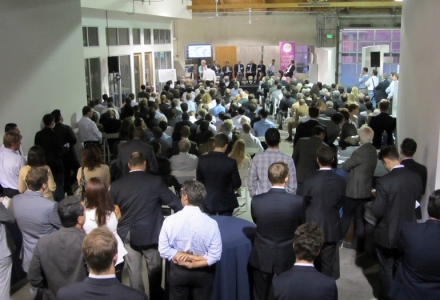
The Future of Culver City – 350 Attend the Bisnow Event at PMI’s 3525 Eastham Creative Office


Over 350 attended our first afternoon event in LA at PMI Properties' Eastham Station, 3525 Eastham Dr in the Hayden Tract in Culver City.

Over 350 attended our first afternoon event in LA at PMI Properties’ Eastham Station, 3525 Eastham Dr in the Hayden Tract in Culver City.

On Tuesday, a standing-room crowd at Bisnow‘s Future of Culver City heard an all-star panel of developers and brokers discuss what’s making Culver City a magnet for new investment: central location on the Westside, the Expo Line extension, and a business-friendly city government seeking solutions to the parking issue. (Cars that fold to park?).

You can read the full Bisnow article below.


The Future of Culver City – Real Estate Bisnow (LA).

Landlords, tenants unite on amnesty plan for illegal apartments – LA Times

Each year, the Los Angeles housing department discovers 600 to 700 unapproved apartments. Above, this building on South Corinth Avenue was found to have bootleg apartments in 2008. It's now under different management. (Gary Friedman, Los Angeles Times

Each year, the Los Angeles housing department discovers 600 to 700 unapproved apartments. Above, this building on South Corinth Avenue was found to have bootleg apartments in 2008. It’s now under different management. (Gary Friedman, Los Angeles Times

Both tenants and landlords want to provide a way for non-conforming units to be made legal.  Homeowners typically oppose this due to the increased parking and density these additional unit would create.  In reality, densification of apartments fuels Los Angeles’ supply of affordable housing.  Families and roommates both add to the density and parking demand in Los Angeles but also decreases the per person cost of housing.  Tenants rent rooms in their rent controlled apartments to other tenants.  I knew someone who actually lived rent free by renting our the other two bedrooms in his rent controlled apartment.  Millennials starting out in the work world can afford to live in popular areas with roommates.

However, homeowners are pushing back.  In 2012, as part of a Solar Energy Facilitation Bill, the City of Los Angeles passed an ordinance that provided that any additional parking spaces maintained in connection with a building become required parking and cannot be removed unless the parking exceeds the current code.  Thus, if a owner created additional spaces over that required at the time of his building permit,  he can no longer use those spaces to legalize non-conforming units or otherwise increase the density on his parcel.  These changes are a push back on densification.

The article below provides an interesting discussion on the feudal plan in Los Angeles to legalize non-conforming units.


Landlords, tenants unite on amnesty plan for illegal apartments – LA Times.

New Study Reveals that Most Adults in Los Angeles are Single. How does this Impact the Los Angeles Apartment Market?

going solo

What are the implications of the revelation that most adults in Los Angeles are single market?  Couples living together may be less likely to buy and more likely to rent.  We can  already assume singles  living alone are more likely to rent. Most  singles prefer to live alone, although economics does not always provide that luxury.  As a result, due to economics, many singles have roommates  and share two or three bedroom apartments.   In desirable, high rent areas, singles  take on roommates to share the rental cost.  These shared two and three bedroom units allow Millennials to live in popular walkable amenity rich Los Angeles neighborhoods.  In these cases, the rent per room is a very important factor.  At PMI, we are trying to produce for Millennials in our Creative Multifamily program hip affordable fully renovated Los Angeles apartments in amenity rich walkable neighborhoods near transit.  In some cases, that involves increasing the bedroom count where practical.  See the full article below:

Going solo! Most adults in Los Angeles are single – LA Times.