LA Times Times reports Mayor sets out to transform targeted L.A. Streets into Walkable Streets.

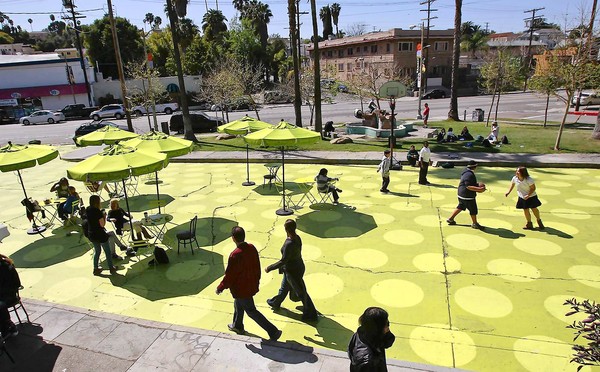
Sunset Triangle Plaza in Silver Lake is a new neighborhood plaza

Sunset Triangle Plaza in Silver Lake is a new neighborhood plaza

This LA Times Story (July 27, 2014, front page)  reports that Mayor Eric Garcetti hopes to transform 14 major thoroughfares into hubs of neighborhood activity.  In a process the mayor describes as “urban acupuncture,” the city plans to add bike racks, plazas, crosswalk upgrades and other amenities aimed at drawing in pedestrians and attracting new businesses.

Why is this important?  Today,  more people desire to live walking distance to amenities, especially restaurants, bars, and shops.   Previously, Angelenos demanded infinite amenities within an easy commute,not walkability.  Now the trend is also for walkable amenities.  This trend toward neighborhood workability has led to the recent increased popularity of Venice, Downtown Santa Monica, Downtown Los Angeles, and Silverlake. In Highland Park, once sleepy York Boulevard has become a magnet for an array of middle- and upper-middle class needs: coffee, comic books, vegan ice cream, and $5 donuts. Abbot Kinney Boulevard in Venice, once favored mainly by locals, is now a regional tourist destination with prices to rival Rodeo Drive. Walkable streets are now a major amenity attracting renters and home buyers.

So what comes first, retail amenities or residential.  It is hard to say.  Maybe it is a little of both.  In Los Angeles, major employment centers must be within easy commute to a potential area in gentrification.  Prices and rents very close to these employment centers are very high. So people seek more affordable areas.  Someone takes a chance and opens a restaurant that takes off and attracts the gentrified demographic.  A house renovator takes note and tries a renovation that succeeds. Other renovators take note and follow.  Other retailers take note and follow.  And so goes the chain reaction that plays out over years and even decades.

Now, Garcetti said he is trying to create conditions favorable to a transformation by targeting locations that already have sparks of new economic activity (retailers or housing renovation). He’s quick to point to success stories in the council district he represented before becoming mayor.

In Silver Lake, he closed one block adjacent to the Sunset Boulevard business district to car traffic, replacing it with a pedestrian plaza painted with green polka dots (Silverlake Triangle Plaza). In Atwater Village, Garcetti worked to make Glendale Boulevard — a major route to the 5 Freeway — more welcoming to pedestrians. City crews upgraded crosswalks, extending curbs farther into the street, and added new trees, signs and trash cans.

Now, on the Westside, Garcetti picked four blocks of Westwood Boulevard anchored by the Geffen Playhouse on one end and by UCLA’s Hammer Museum on the other. In Mar Vista, Garcetti picked Venice Boulevard between Beethoven and Inglewood Boulevard.   On Figueroa Street in Highland Park, another corridor (between Avenue 50 and Avenue 60) selected by Garcetti, check-cashing businesses and pupuserias have been joined by workout places, a record shop, a vintage clothing store and Kitchen Mouse, a storefront restaurant that promises vegan and gluten-free dining options. Customer Elizabeth Brizzi said the area is starting to have the “Silver Lake feel” — a reference to the hip neighborhood once represented by Garcetti.

You can read the full article below.


Mayor sets out to transform L.A. streets through ‘urban acupuncture’ – LA Times.

Downtown Art District Retail Starting to Pick Up Steam

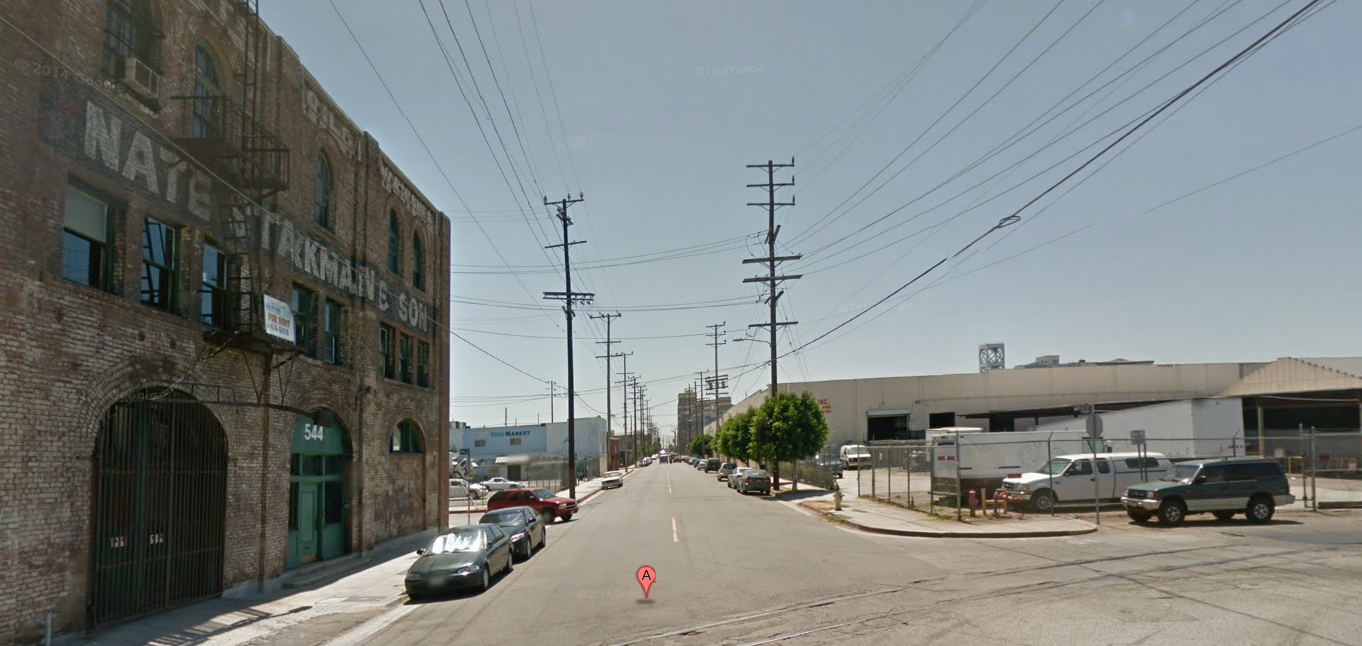
Mateo and Palmetto

Mateo and Palmetto

The Downtown Art District retail will start to pick up steam. Currently, the Art District has 3 hot restaurants (Bestia, Factory Kitchen, and Church and State) ;an Urth Cafe; and four coffee houses (Slumptown, Handsome, Verve, Novel, and Daily Dose). Now two projects will add 165,000 square feet of new retail.

A corner property where Mateo and Palmetto streets meet, now occupied by five warehouses, is about to be transformed into a huge, $30-million shopping center (with parking!), says the Downtown News. The 125,000-square-foot “urban retail center” will be an open-air mall “anchored by a major retailer” (as yet unnamed) and have a grocery store, according to a release from ASB Real Estate Investments, which is partnering with Century City-based Blatteis & Schnur on the development. No renderings have been released yet, but developers have said that they’re hoping to keep the center in line with the AD’s “unique place in Los Angeles” and that they’ve planned ” [a] brilliant design … allowing us to attract unique, compelling and artisan retailers and food purveyors.”

The Yards

The Yards

The second project involves the 45,000 square foot portion of the 435 apartment unit One Santa Fee under construction.  The developer announced it as a collection of 25 unique designers, specialty boutiques, and renowned chefs curated around private landscaped walkways to be called the Yards. ,

Finally, the retail is filling in the Art District to provide an exciting experience for those who work and live in the area.

Honey I Shrunk The Dining Room

More and more new apartments are eliminating the dining room..  Many Millennials eat out, at their desk, on a coffee table (and in front of a video screen) , or at a eating bar and (in front of a video screen).  Jerome Synder’s new two luxury highrise apartment towers, the Vermont, at Wilshire and Vermont,do not offer residents a dining room.

Notice that in the one bedroom floor plan below, there is no dining room:

No Dining Room in the Wilshire Vermont One Bedroom.

No Dining Room in the Wilshire Vermont One Bedroom.

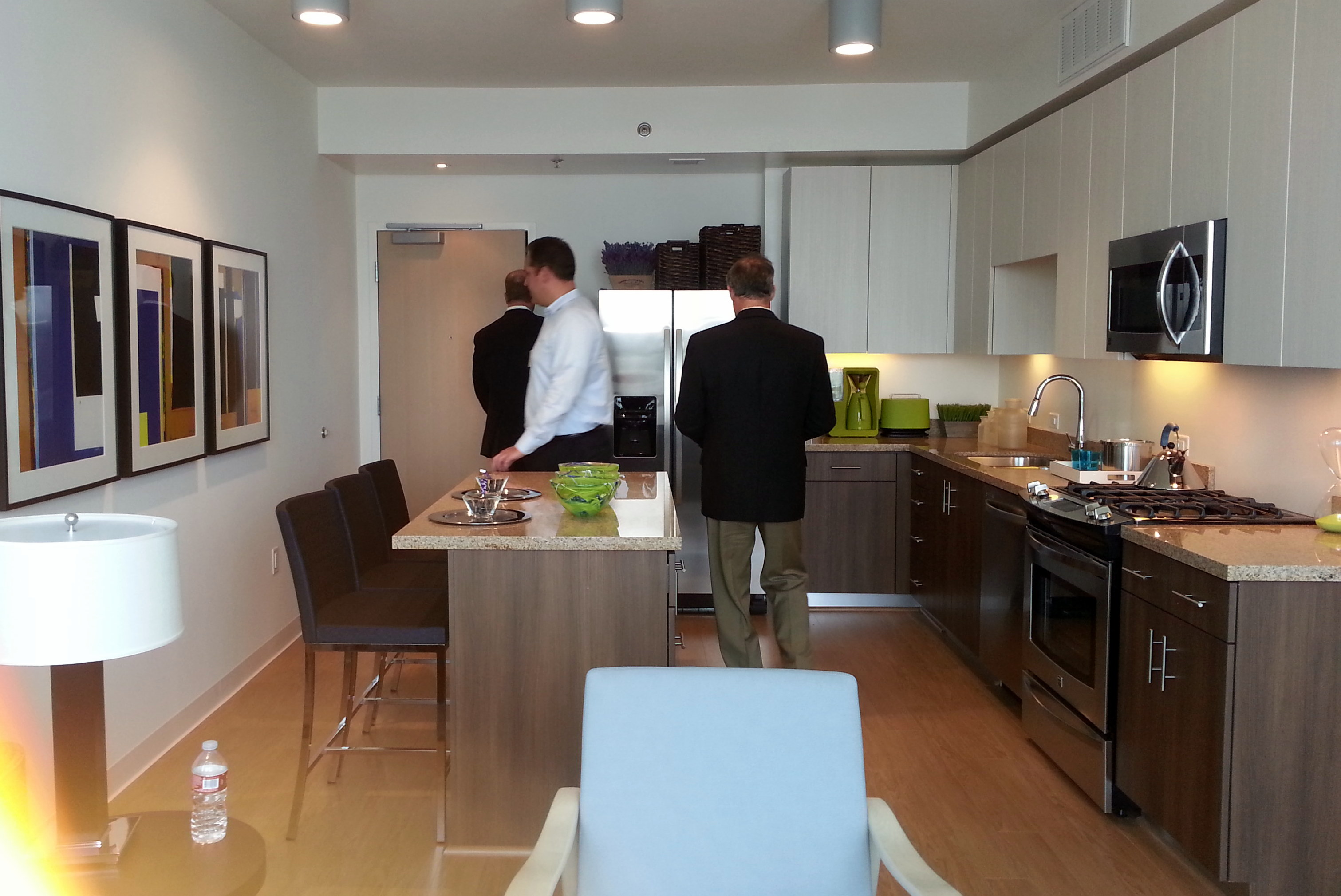
In the Living Room Looking Toward the Kitchen Eating Bar in the Vermont One Bedroom

In the Living Room Looking Toward the Kitchen Eating Bar in the Vermont One Bedroom

Instead, the dining room is replaced with an eating bar in the kitchen.

Creative Apartment Space is Born with Deconstructed Open Wood Ceiling

We just gave birth to a full creative apartment unit renovation at our new project at 1306 Temple Street in Echo Park.  At 580 square feet, the one bedroom unit has full deconstructed open wood ceilings.  We stripped off the drywall ceiling of a 1920 apartment unit and left the wood lumber exposed.  To accomplish this, we installed new finished doug fir plywood just above the existing wood ceiling frame. The result was to create a loft look in only 580 square feet.  Due to City laws, most one bedroom loft like apartment units (with wood ceilings)  in Los Angeles are much larger. Creating this unit may seem easy, but it was very difficult because it had never been done before.

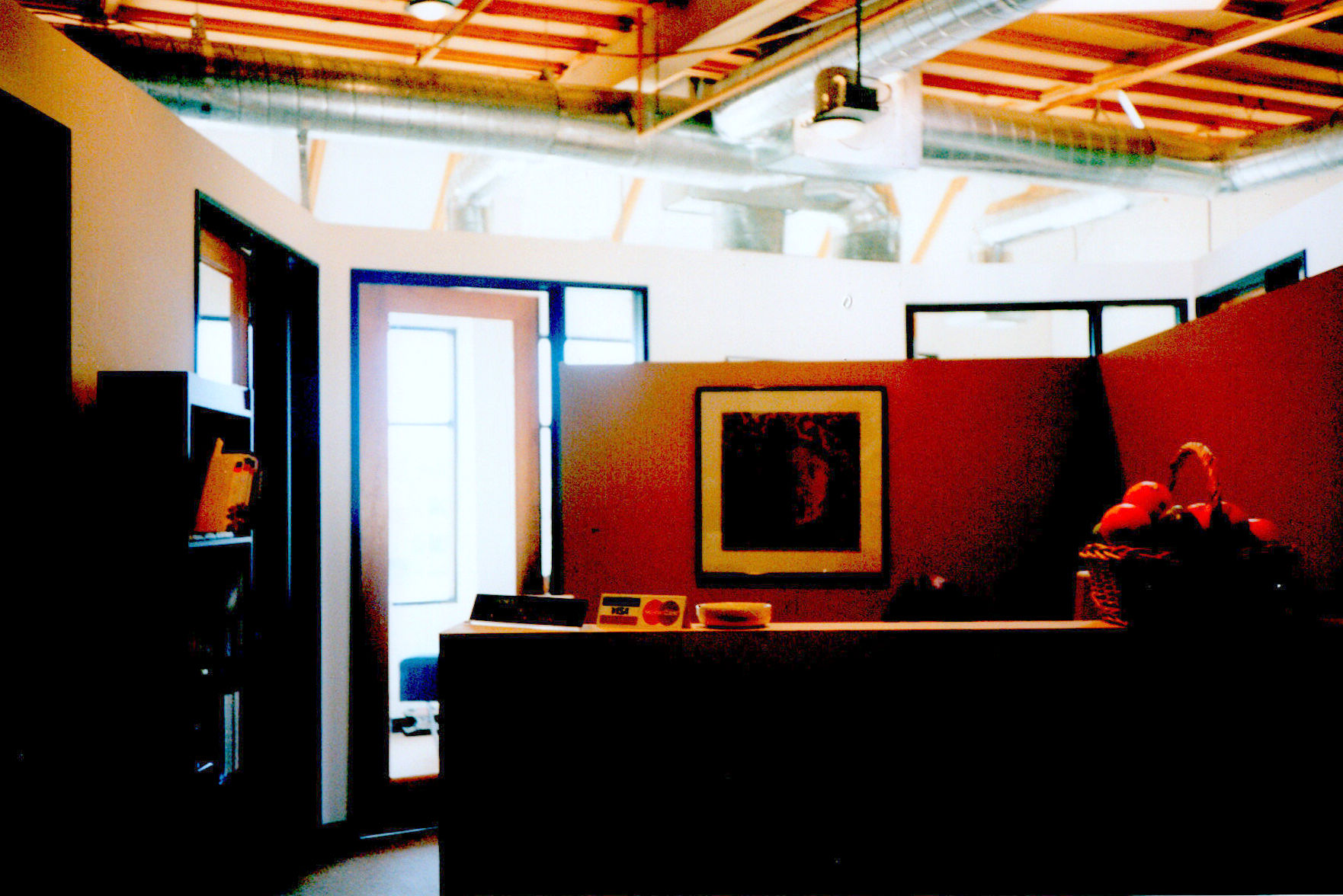
A number of dubious team members worried the city fire codes would not allow an open ceiling, or it could not be framed.    Eighteen years ago, we faced a similar challenge.  We proposed to strip the acoustic tile from an existing 1000 square foot office suite and create an open wood ceiling with rigid ducting and skylights.  In other words, we wanted to create a creative office in a conventional 3 story office building.

First Wood Open Ceiling in a Conventional 1982 Office Building, 720 Wilshire, Santa  Monica

First Wood Open Ceiling in a Conventional 1982 Office Building, 720 Wilshire, Santa Monica

.  No one had done this before in Los Angeles. The first prospect loved the space but asked when the ceiling was going in.  Shortly, we had multiple offers for the space.  Again, the first one was hard, but the rest is history.

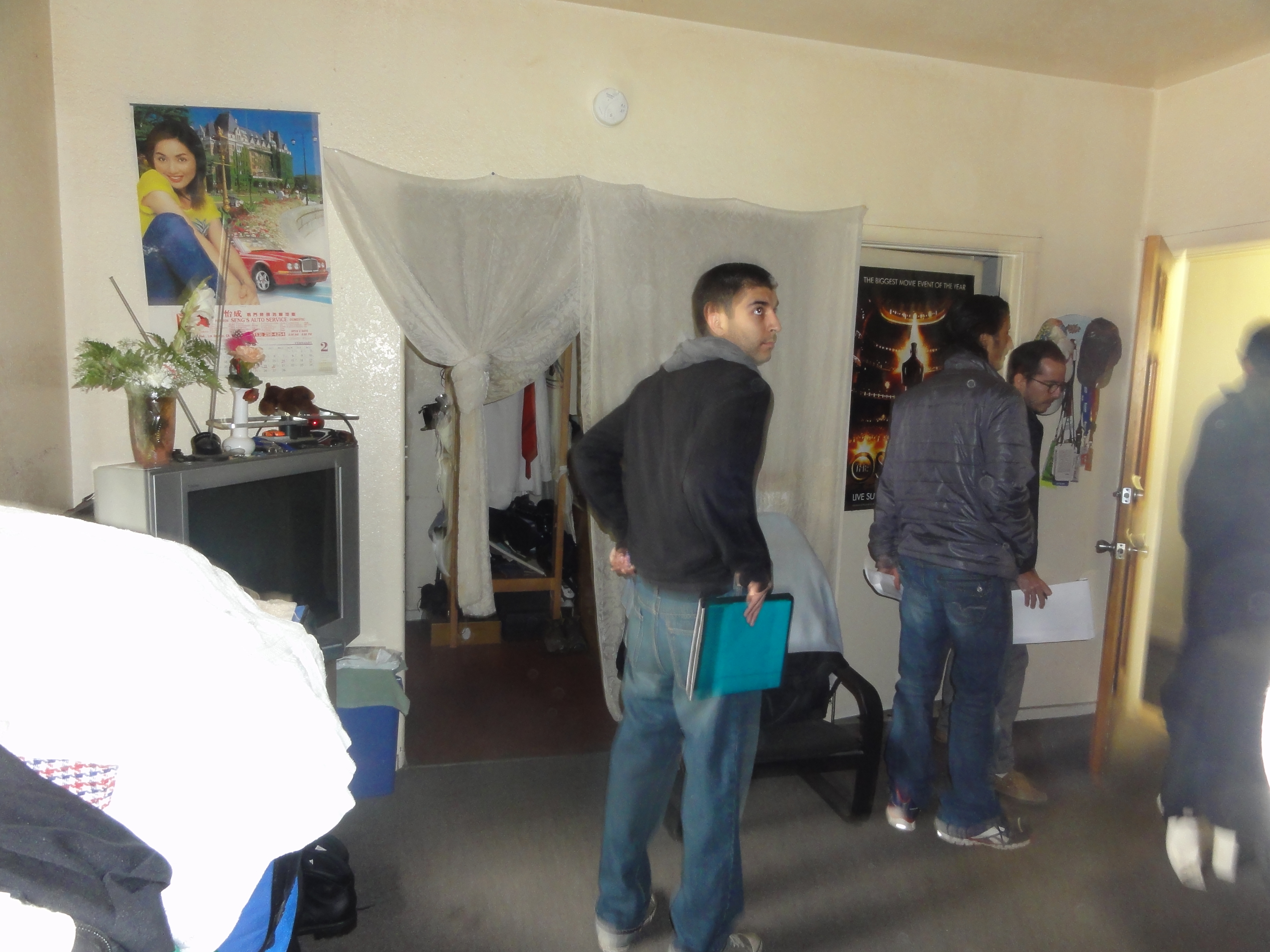
Below is how the 1920 apartment unit, with drywall ceilings, looked  before our renovation..

Unit Before Renovation

Unit Before Renovation

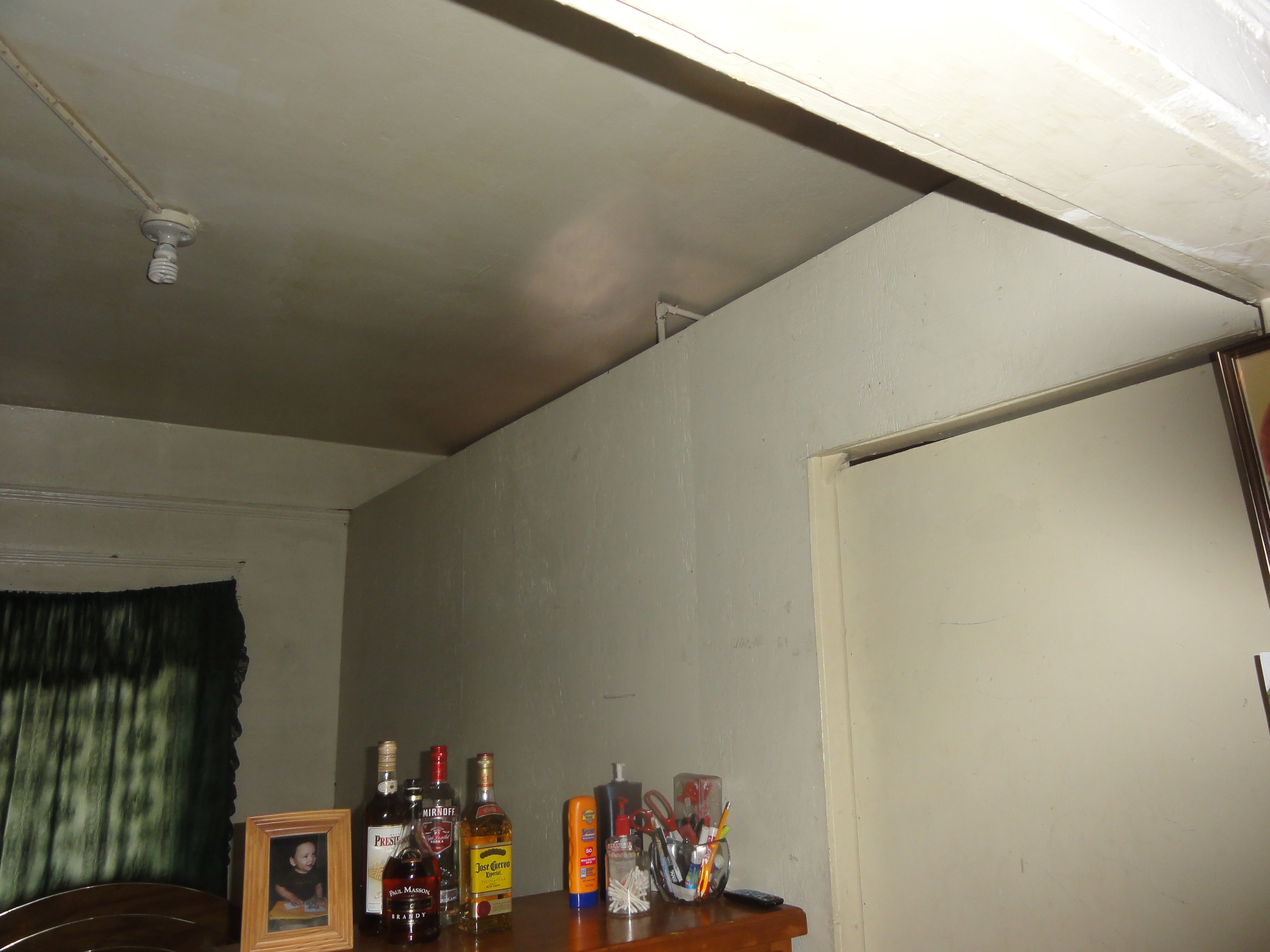
Here is a close up of the ceiling before deconstruction:

Original Drywall Ceiling Prior to Deconstruction

Original Drywall Ceiling Prior to Deconstruction and Renovation

Below is the unit after renovation: a loft looking creative apartment unit with the new deconstructed open wood ceilings.

After Renovation with New Deconstructed Open Wood Ceiling

After Renovation with New Deconstructed Open Wood Ceiling

Congrats to our project designer/manager, Adaptive Realty, our consulting engineer/architect Gwynne Pugh Urban Studios, and  our PMI team.


Shrinking Security Deposits Could Make the Next Downturn Tough for Creative Office Landlords

security deposit

Creative office landlords are having a difficult time getting security from tenants in the creative field.  One of the major drivers of creative office, especially in San Francisco, is the technology industry.  Start up companies, whose survival depends on continued venture capital funding, compose a very significant component of this market demand. In the dot com bust,  these tech tenants folded like a house of cards.  I lost 13 out of 14 of these tech tenants.  Yes, tech tenants are better capitalized than before.  However, instead of folding in six months, they can last a year or two, maybe. What is different the last time  is that we got whopper security deposits in the form of letter of credits–that ranged from one to three years rent.  Let me tell you, that really helped.  Today, it is hard to get a security deposit equal to six months of rent from these tenants.  Even if you can get more than a 12 month letter of credit–the bankruptcy laws have changed to limit a landlord to only a 12 month rent recovery in bankruptcy–even in the case of a letter of credit.

Also, a lot more creative office is being produced right now.  I don’t even know if the conversions are being counted in the new construction numbers in the brokerage market reports.

Los Angeles did better than San Francisco during the dot com bust since its creative tenancies are more diversified comprised of entertainment, advertising, media, design, and technology. Some landlords are trying to get credit technology companies like Google and Microsoft. But you cannot hold out only for those tenants.


Tenants Build Their Own Partitions in New York to Beat the High Cost of Housing

partitions

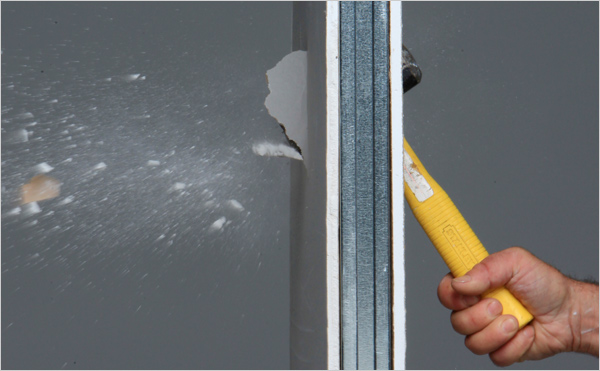
In New York, young tenants build their own room partitions to create more bedrooms to facilitate sharing apartment.  The tenants put the walls up and take them down, often without the landlord’s permission.

In  New York, the trend of do-it-themselves partitioning has run afoul of building and zoning codes which prohibit such partitioning.  Partitioning in New York apartments and code violation issues are discussed in the article below.  The article also references a company who put up and takes down code compliant partitions of different types  (sliding doors, furniture walls, partial height walls) so these young people can accomplish their housing objectives.

In Los Angeles,  young millennials are locating to pricier urban areas, a trend that pushes up rents.  As a result, young urban Los Angeles tenants desire more bedrooms per square foot.

In addition to more bedrooms, Los Angeles young urban tenants also sometimes desire a partitioned office nook.  In one case, one of our young tenants split a large living room in half with screens.  One one side was the office where they worked on laptops, and on the other side was the living room with a couch, coffee table, and computer used as an entertainment center.


The Fall of Temporary Apartment Walls – NYTimes.com.

Everybody is Buying and Noone is Selling

everyone wants to buyAt the June 4 Marcus and Millichap investment conference, a Marcus and Millichap representative gave the results of an investment survey: in 2014, 30% of the existing apartment owners wanted to buy and very few wanted to sell.  In a special research report by Marcus and Millichap called “First Quarter 2014 Commercial Real Estate Investment Outlook”, the report declared “Investor Confidence Trending at 10 Year High.”  Nearly half of  all office investor who already own properties (49% percent) believe  now is the time to buy more, while only 15% consider now the time to sell.  As a result,  prices are climbing, and most properties that are not overly priced receive multiple offers.  Many sellers demand non-contingent offers.

In certain cases, these markets are up they go until they blow. One exception was the market of 1998.  Commercial properties started a steep rise from their historic lows of the early 1990 recession.  Suddenly, world events triggered what was known as the Russian Financial Crisis.  Stock plummeted, and pundits started talking recession.  Property appreciation came to an abrupt halt. Although both the world and real estate market shortly recovered from this interruption, property values slightly dipped and only gradually recovered.  Even as occupancies and rents climbed, real estate values remained stubbornly muted.  Instead, everyone one had stock market and internet stock market fever. Except for properties heavily vested in technology companies, property values did not experience a steep fall during the early 2000 recession and quickly recovered.

It is hard to tell whether property prices will continue to rise until a recession knocks them down, or i f a rise in interest rates creates a much softer landing.

Palms Is the Best Neighborhood in L.A. for Millennials

palms

Niche Ink, a site that analyzes education data, has declared Palms to be the best place in Los Angeles for Millennials. (LA ranked seventeenth on the list of best metros, though.) In order to find the optimal areas for youngs, Niche used data including median rent and income from the Census’s American Communities Survey, as well as FBI crime stats and “proprietary Niche rankings” from surveys of college students and grads on things like nightlife and best places to live after graduation.  Niche declared Palms the number one area in LA for young people.

Many people out of college ask where the best apartment deals on the West side of Los Angeles are?  I always refer them to Palms where the rents are lower and the access to other areas is great.   When the expo line is finished, Palms will have its own station that will connect Palms to Culver City, Santa Monica, and Downtown Los Angeles.  Palms is also close to Downtown Culver City which is now filled with hip new bars and restaurants and other amenities.  Indeed, I am promoting Palms to tech companies as a good source of affordable housing for their employees.  Restaurants and bars are taking notice and moving to Palms, according to one of my young colleagues.   You can read the article below.

Palms Is the Best Neighborhood in L.A. for Millennials | The Informer | Los Angeles | Los Angeles News and Events | LA Weekly.