
Unknown's avatar

About PMI Properties

PMI is a thirty year old property investment company located in Beverly Hills/Bel Air that invests in commercial and residential real estate. Since its founding in 1978, PMI Properties has closed over $500 million in office, shopping center, industry and apartment properties throughout Los Angeles and San Francisco. PMI's most recent endeavors have focused on pioneering creative office suites in office buildings and converted warehouses.These properties have been primarily located in Los Angeles and recently in San Francisco. PMI had its roots in investing in apartments, but more recent investments have focused towards offices, creative offices and converted warehouses. PMI was the first to pioneer a new, creative suite in office buildings with its proprietary "lifestyle suites," which featured skylights, partial hardwood floors, designer lighting, raised ceilings, interior glass, and other upgrade features. PMI pre-built the suites in an efficient and generic floor plan that not only achieved a premium, but also rented faster than suites requiring build-to-suit modifications. PMI was also one of the first to convert warehouse industrial facilities into flex creative space prior to the Internet boom. Today, PMI's suites are some of the most coveted creative offices on the market. Subscribe to get our newsletter and blogs for free! http://eepurl.com/hG0V2

Tenants Build Their Own Partitions in New York to Beat the High Cost of Housing

partitions

In New York, young tenants build their own room partitions to create more bedrooms to facilitate sharing apartment.  The tenants put the walls up and take them down, often without the landlord’s permission.

In  New York, the trend of do-it-themselves partitioning has run afoul of building and zoning codes which prohibit such partitioning.  Partitioning in New York apartments and code violation issues are discussed in the article below.  The article also references a company who put up and takes down code compliant partitions of different types  (sliding doors, furniture walls, partial height walls) so these young people can accomplish their housing objectives.

In Los Angeles,  young millennials are locating to pricier urban areas, a trend that pushes up rents.  As a result, young urban Los Angeles tenants desire more bedrooms per square foot.

In addition to more bedrooms, Los Angeles young urban tenants also sometimes desire a partitioned office nook.  In one case, one of our young tenants split a large living room in half with screens.  One one side was the office where they worked on laptops, and on the other side was the living room with a couch, coffee table, and computer used as an entertainment center.

 

The Fall of Temporary Apartment Walls – NYTimes.com.

Everybody is Buying and Noone is Selling

everyone wants to buyAt the June 4 Marcus and Millichap investment conference, a Marcus and Millichap representative gave the results of an investment survey: in 2014, 30% of the existing apartment owners wanted to buy and very few wanted to sell.  In a special research report by Marcus and Millichap called “First Quarter 2014 Commercial Real Estate Investment Outlook”, the report declared “Investor Confidence Trending at 10 Year High.”  Nearly half of  all office investor who already own properties (49% percent) believe  now is the time to buy more, while only 15% consider now the time to sell.  As a result,  prices are climbing, and most properties that are not overly priced receive multiple offers.  Many sellers demand non-contingent offers.

In certain cases, these markets are up they go until they blow. One exception was the market of 1998.  Commercial properties started a steep rise from their historic lows of the early 1990 recession.  Suddenly, world events triggered what was known as the Russian Financial Crisis.  Stock plummeted, and pundits started talking recession.  Property appreciation came to an abrupt halt. Although both the world and real estate market shortly recovered from this interruption, property values slightly dipped and only gradually recovered.  Even as occupancies and rents climbed, real estate values remained stubbornly muted.  Instead, everyone one had stock market and internet stock market fever. Except for properties heavily vested in technology companies, property values did not experience a steep fall during the early 2000 recession and quickly recovered.

It is hard to tell whether property prices will continue to rise until a recession knocks them down, or i f a rise in interest rates creates a much softer landing.

Palms Is the Best Neighborhood in L.A. for Millennials

palms

Niche Ink, a site that analyzes education data, has declared Palms to be the best place in Los Angeles for Millennials. (LA ranked seventeenth on the list of best metros, though.) In order to find the optimal areas for youngs, Niche used data including median rent and income from the Census’s American Communities Survey, as well as FBI crime stats and “proprietary Niche rankings” from surveys of college students and grads on things like nightlife and best places to live after graduation.  Niche declared Palms the number one area in LA for young people.

Many people out of college ask where the best apartment deals on the West side of Los Angeles are?  I always refer them to Palms where the rents are lower and the access to other areas is great.   When the expo line is finished, Palms will have its own station that will connect Palms to Culver City, Santa Monica, and Downtown Los Angeles.  Palms is also close to Downtown Culver City which is now filled with hip new bars and restaurants and other amenities.  Indeed, I am promoting Palms to tech companies as a good source of affordable housing for their employees.  Restaurants and bars are taking notice and moving to Palms, according to one of my young colleagues.   You can read the article below.

Palms Is the Best Neighborhood in L.A. for Millennials | The Informer | Los Angeles | Los Angeles News and Events | LA Weekly.

Apartment construction surges across the Southland amid rising rents 


Multifamily Construction Rebounds

Multifamily Construction Rebounds

A recent LA Times article reported that multifamily construction rose to the fastest pace in six years.  Indeed, my observation is that builders are building  the most for rent multifamily units since the late 1980s.  There are many reasons cited in the below article why this surge will not result in an oversupply over the next year or two.  However, if the trend continues, some caution must eventually be applied to an ever surging supply. Even the 2013 USC Casden Multifamily Forecast warned that an ever increasing supply could eventually lead to lower rents and a rising vacancy rate.   Usually, such overbuilding  manifests itself in rent reductions during recessions and results in steeper decreases than otherwise. In the past, at some later stage in the cycle, developers switch from rental to condominiums and thereby reduce the supply of newly constructed rentals in Los Angeles.

In the short terms, rents continue to rise in Los Angeles and vacancies decline  as the economy improves.    You can read the LA  Times article below:

Apartment construction surges across the Southland amid rising rents – Los Angeles Times.

At the recent Bisnow Multifamily Conference, many pundits debated what inning we were in.  In other words, how many years will the rents rise and vacancies decline before rent fall and vacancies rise.  I find it very difficult to predict what inning we are in. However, we can conclude that rentals properties are not inexpensive per square foot on a historical basis.  Value plays usually occurs in the very early stage of recovery or late stage of the decline.  So from this, we can conclude we are not in the very early stage of  this positive cycle.

Changes in Multifamily for Millennials

multi-family

Here are some takeaways from Bisnow’s SoCal Multifamily Conference on May 22, 2014

1.  Shower Only:  50 to 75% of the tenants will accept shower only units.

2.  Internet Speed:  Millennials are very concerned with the speed of the available internet service.

3.  Online:  Millennials prefer to do as much on line as possible:  pay, process work orders, and rent.

4.  Work:  Many Millennials are working either part time or full time at home.  They like internet cafes,  conference rooms, and  offices to use or rent within the apartment complex.  The lines between live and work are blurring.

5.  Core 24/7 urban cap rates are sub 4%, and developers are building to 6% cap rates on un-trended rents.


WLA Office Rents and Concessions Rise Since 2010

Office Rents and Concession Rise Since 2010

Office Rents and Concession Rise Since 2010


In most other types of real estate, when the market recovers, rents go up and concessions go down.  However,  this office market  may be different. This Compstak chart compares  WLA office market rents and concessions in 2010 and 2014.  Rents have risen but so have average tis and free rent.  As on explanation, many investment companies are pushing now to get higher contract rates by maintaining or even increasing tenant improvement and free rent.  These companies can then achieve higher appraisal values, refinancing proceeds, or sales prices.


Another former PMI startup tenant has a successful exit.

zendesk

In late 2008,  with SOMA on the dive, we  leased only to start-ups on short term leases with nothing but first round capital in our 410 Townsend building in San Francisco.  Almost every company in the building achieved success.  Zendesk is another one of those original tenants. Zendesk just went IPO on the NYS.  The story the building as a start-up cluster was featured in the Wall Street Journal in 2010.   Congratulations Zendesk.  The article about the IPO is below.


Zendesk stock soars 49 percent on first trading day – San Francisco Business Times.

How to Revive Westwood Village?

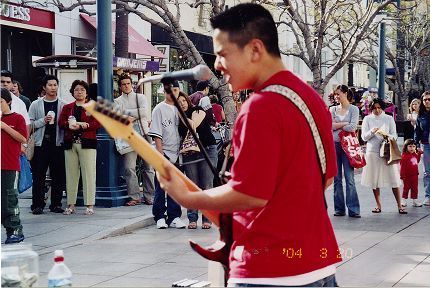
Street Performer at The Third Street Promenade

Street Performer at The Third Street Promenade

People perceived Westwood Village as a distressed retail area because it has been overshadowed by the Third Street Promenade and other retail areas of the City.  As a resident, I have been delighted with the increase in local retail opportunities in the Village , including Target, Ralphs, Trader Joes, Whole Foods, CVS Drugs, and Rite Aid.  Yes, Westwood Village no longer has the weekend foot traffic or tourist draw it had in the 1980s.

I will offer one suggestion here.  The Third Street Promenade offers a number of street performers about every 100 feet.  One can go to the Promenade and experience free entertainment from singers to jugglers.  I would suggest that Westwood Village try a similar tactic on weekends.  Last week, I saw a musical group outside Starbucks next to the Village Theatre.  A large group gathered around and filled Starbuck’s outdoor seating.  It gave a verve to the area.

Here is some information on how Santa Monica regulates this entertainment:

http://suebasko.blogspot.com/2011/03/santa-monica-3rd-street-promenade.html

Converting Class C Office Buildings into Apartments Part 2–The Case of the ElysianLA

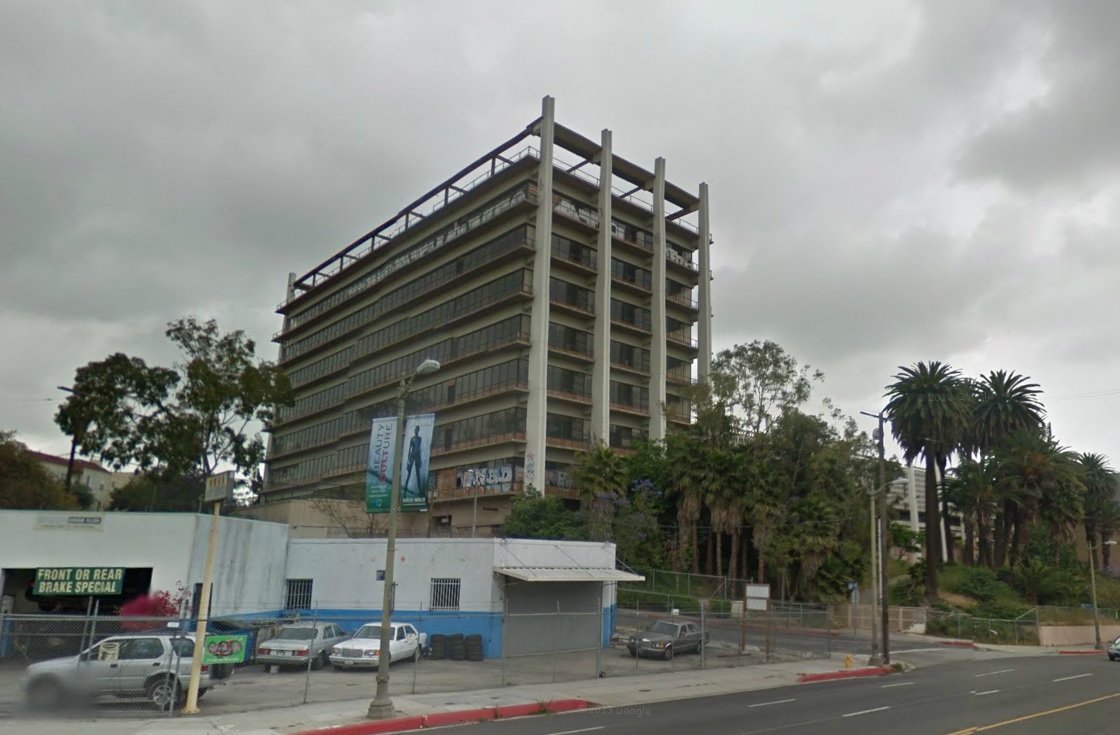
Class C Office Building in Echo Park Converted to Residential

Class C Office Building in Echo Park Converted to Residential

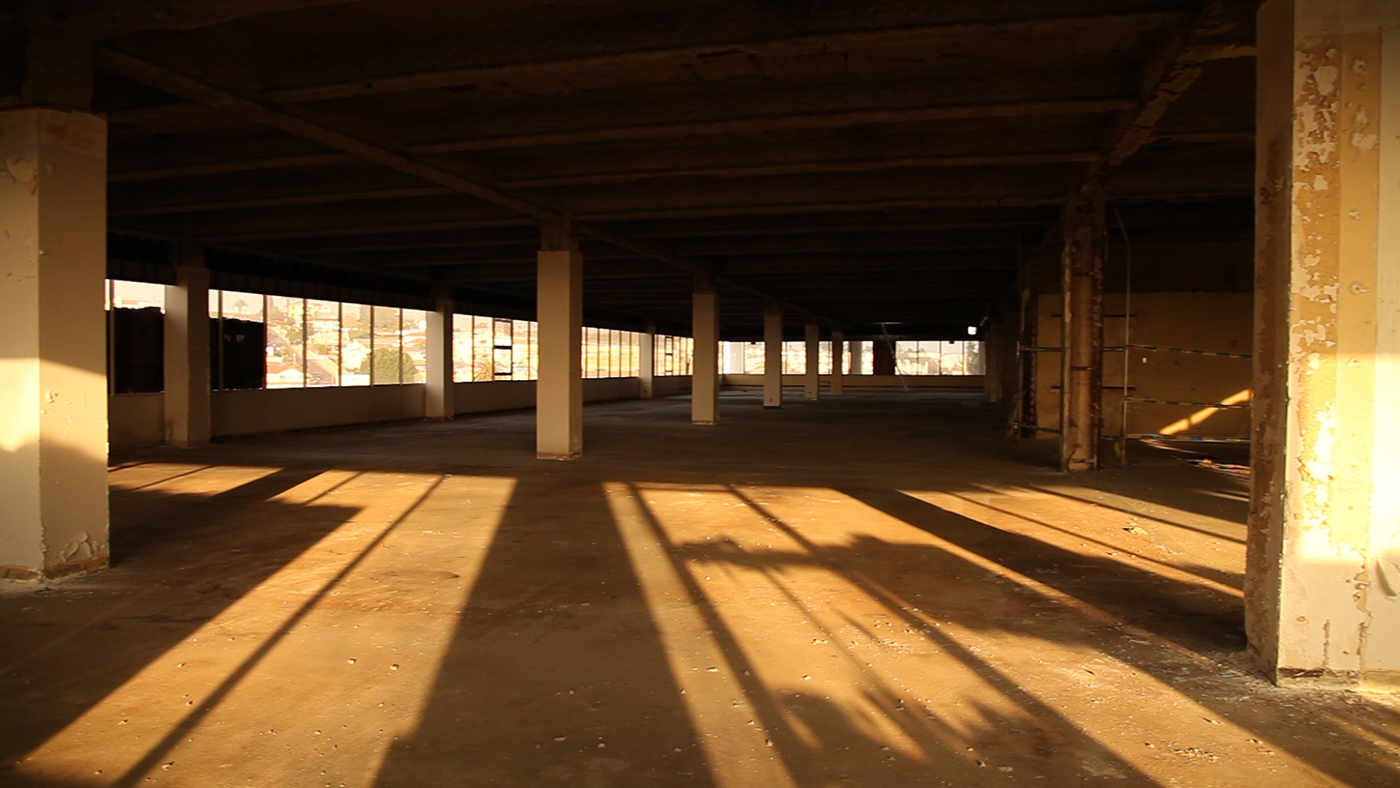
Vacant Interior of Office Building

Vacant Interior of Office Building

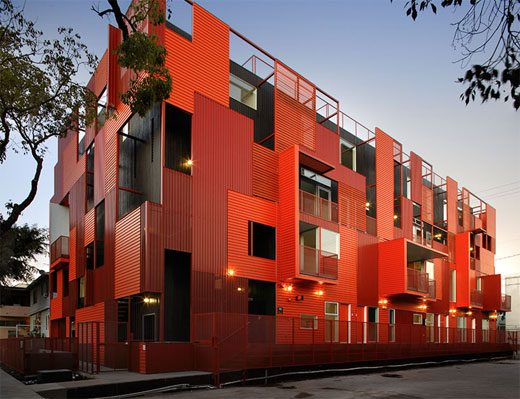
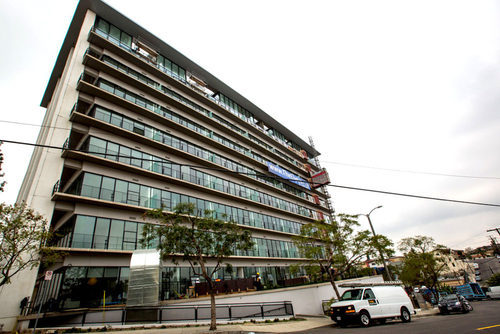
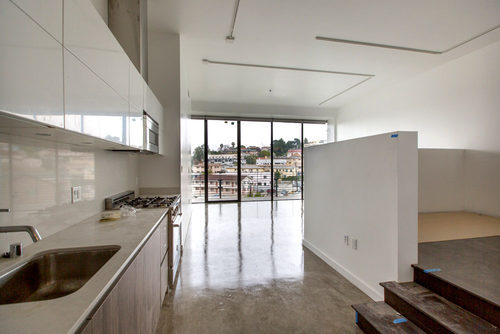
Here is an example of a completed 1971 office building in Echo Park Los Angeles vacant since 1994.  Linear City Development purchased the building in 2011 and recently completed renovation of the building into 96 residential loft like units. Here is the building after renovation as the ElysianLA:

new exterior03_2014_THE_ELYSIAN-14603_2014_THE_ELYSIAN-135midlevel