New York Triples Post-Production Credit; Moves Aggressively to Take LA Business

New York has recaptured most of the jobs lost there during the recession.  Mayor Michael Bloomberg has done a great job at attracting technology tenants to the Big Apple.  For example, Google has a million square foot facility in the Chelsea area of New York.  That space trumps its 100,000 square foot facility in the Venice area of Los Angeles.  The music sharing service Spotify, and Livestream, the market leader for live event coverage, are also located in New York.  There is a website, called Made in NY Digital Map, that points out digital and tech tenants located throughout the city.

Not only is New York attracting tech and digital tenants, but they are also starting to court a substantial piece of L.A.’s film post-production business with a recent tax credit.  New York Governor Andrew Cuomo recently enacted this law, which increases the previous 10% credit to a whopping 30% on post-production costs.  If a company wants to earn a slightly larger credit, they can venture to upstate New York and get a 35% credit.  New York is aggressively going after L.A.’s post production business, which has a heavy concentration on the Westside of Los Angeles.  This is the first type of post-production credit the industry has seen.  Time will tell if companies will move to the East Coast to take advantage of it.

New York has been having an astounding year in TV production, mainly because of its film tax credit program.  They are setting aside more than $400 million a year in order to attract film and TV productions. Compared to the $100 million that California spends, one has to wonder why they aren’t putting up much of a fight against New York.

The Los Angeles Times goes more in-depth about this subject in their recent article.
Examples of Los Angeles’ Emerging Video Content for the Web Companies

Los Angeles is finally gaining some success in finding a way to apply its creative talents in media and entertainment to the web.  As a result, a new emerging industry is forming that combines artist’s talents with digital tech expertise. These companies produce original video content for the web.  Below are some stories on couple of these firms.

Culver City Evolves from Quiet Community to Urban Area; Gains a ‘Media for the Web’ Cluster

Maker Studios, a company that produces media content for the web, just signed a 50,000 square foot lease at 3562 Eastham Drive in Culver City.  Maker Studios joins other recent media-for-the web content companies in the Hayden Tract.  Several companies include Four Wall Studios, Mahalo, and Popsugar.  The cluster of these firms gives rise to a small community that could encourage other firms in this emerging industry to also seek office space in Culver City.

The success of these firms would also help create a new source of demand for Culver City creative space.  These media-for-the web firms join other creative office companies in Culver City that include digital advertising, entertainment, old media, and software firms.  A recent article from the Los Angeles Times discusses the success of Culver City and its challenges.  The addition of 1100 parking spaces at the Washington and La Cienega Expo stations helped convince these firms to locate in Culver City.  As some tech companies scale to 10 employees per 1000 square feet, the Expo line may provide one of the few ways for firms to help provide an alternative to parking to accommodate such density.

Culver City has transformed into one of main areas on the Westside that many tech and media tenants have been drawn to for creative office space.  In the second quarter of 2012, Culver City  had a net absorption of 16,000 square feet, with the asking rates for Class A and Class B space remaining constant from the first and second quarters of 2012.

Office Boundaries and Open Spaces

Open floor plans, collaborative spaces, and no partition work areas are not always optimal.  Some people need quiet areas and some people need the ability to talk on the phone or with others.  This article from the Urban Land Institute discusses the balance that must be reached with such open collaborative spaces between open work areas and private areas.

Why Tech Firms are Moving to San Francisco

In a recent San Francisco Business Journal article, Terry Cunningham, President and General Manager of Evault, a cloud back-up and recovery service, explained why the company moved its 100 person Emeryville offices to San Francisco.

Cunningham said one of the great advantages of relocating to San Francisco is that he has a “wider pool from which to recruit, because more people want to work in the city than in the South Bay, and the city is centrally located, making it easier commuting from the East Bay and other spots.”

Plus, Cunningham said San Francisco is just “hipper” than the South Bay.

“San Francisco is cool, and we were just in a wasteland down south.  There was nothing cool in the particular location we were in.  You had to get in your car to drive for lunch.”

Cunningham has been reveling in the walkabillity of his new neighborhood.  The environment, coupled with the new office’s design, makes for a “more intimate working culture, in which people get to know each other better,” he said.

The Future of Office Workspace: Less is More

Some may argue that office space in West Los Angeles has become too plentiful. Soft markets, when there is an excess of supply over demand, occur about 80% of the time.  Conversely, tight markets occur about 20% of the time.  Los Angeles brokers and building owners have to face the reality that demand has been decreasing over the last two decades.  This industry is very mature, and it may be time for a change.  As this article from CoStar Group points out, one of the changes that should be made in office design is to accommodate the needs of the next workforce generation.  Unfortunately, the next generation demands less, not more, office space per employee.

To add value to their properties, Westside Los Angeles office owners will need to design spaces that operate with greater efficiency.  They will also have to account for greater densities of employees in these spaces.  These two tasks need to be accomplished simultaneously while continuing to foster an interesting and creative atmosphere.  These environments will further promote collaboration and will have a positive effect on employees rather than sticking them in cubicle farms.

The Westside does not need more space, but simply better quality of space. Despite a 20% vacancy rate in Playa Vista, developers are planning to bring on another million square feet of office space in the next couple of years.  If the future workforce demands less space, one may question why this is being planned.  Investors, developers and owners have to ask themselves if they are meeting a tenant demand or investor demand.

Silicon Beach Startup BetterWorks Has Shut Down

TechCruch has reported that BetterWorks, a startup based in the Silicon Beach area has shut its doors at the end of May.  This is a giant blow to the Silicon Beach startup movement in Los Angeles.  Silicon Beach needs a startup that can stand the test of time and be a big hit in order to start competing with other tech hotbed areas in the country.

Kitchens, Lounges, and Break Areas Expand in SoMa Offices

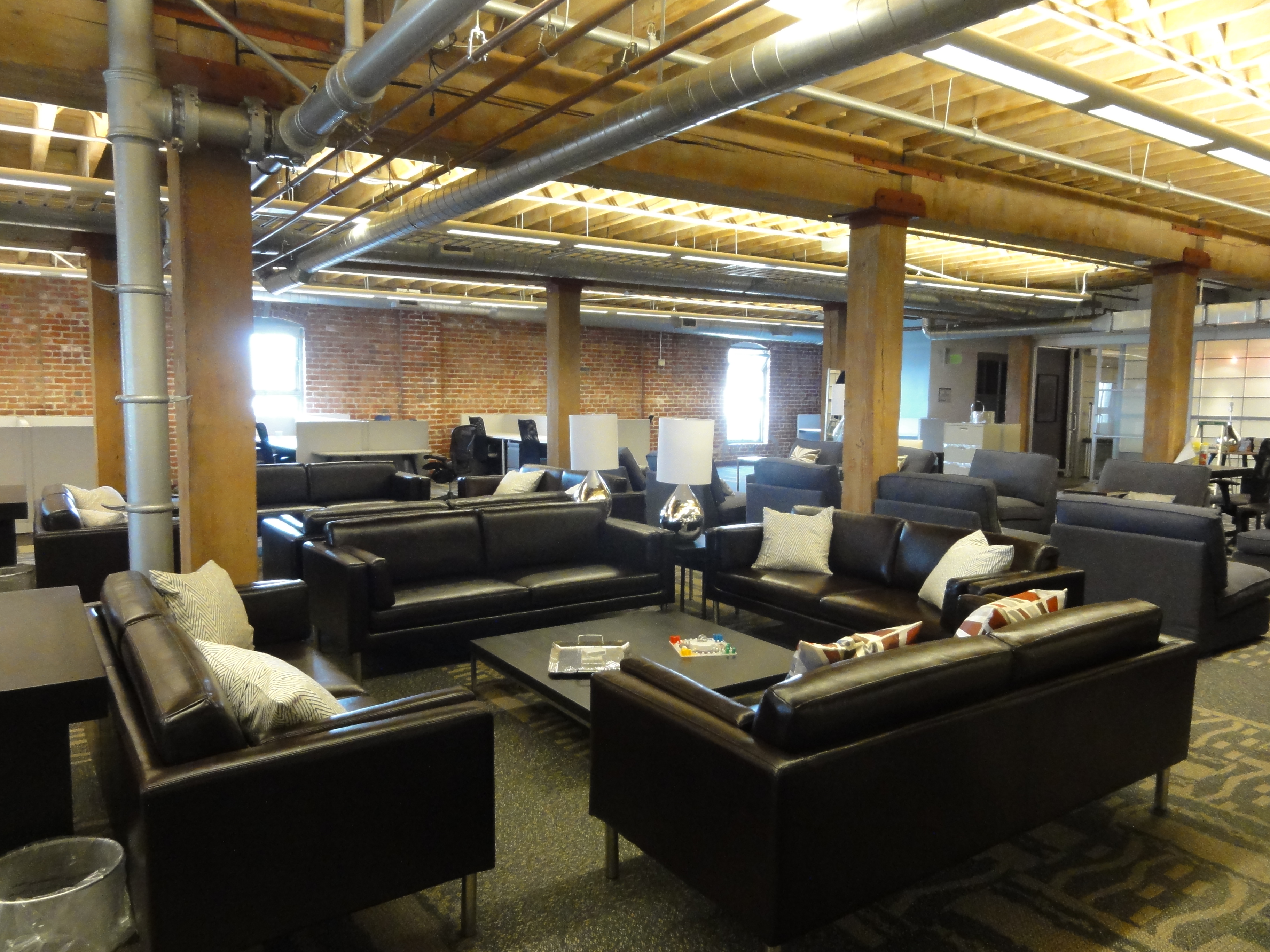
Couches and Lounge Chairs Provided for Employees

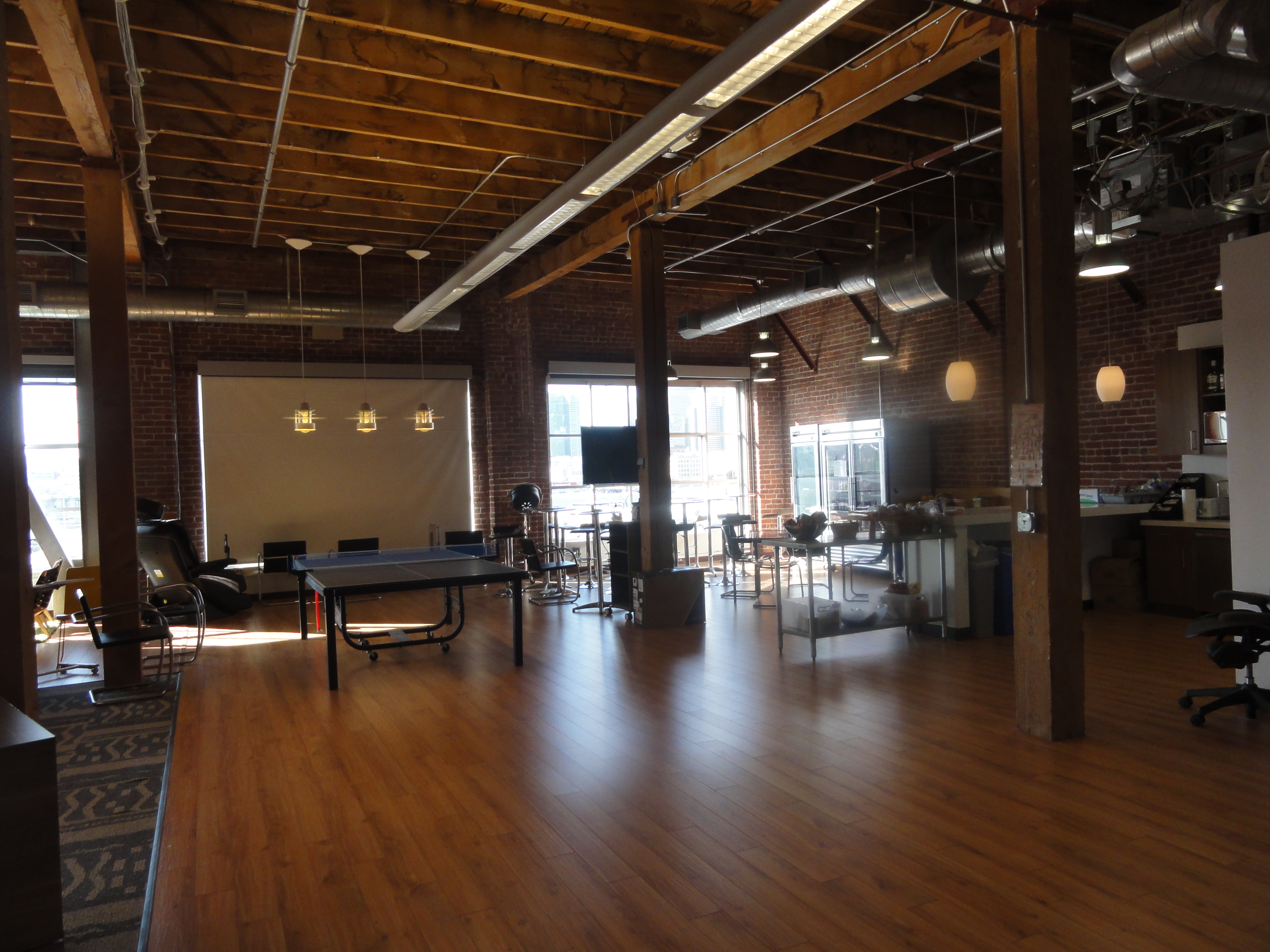
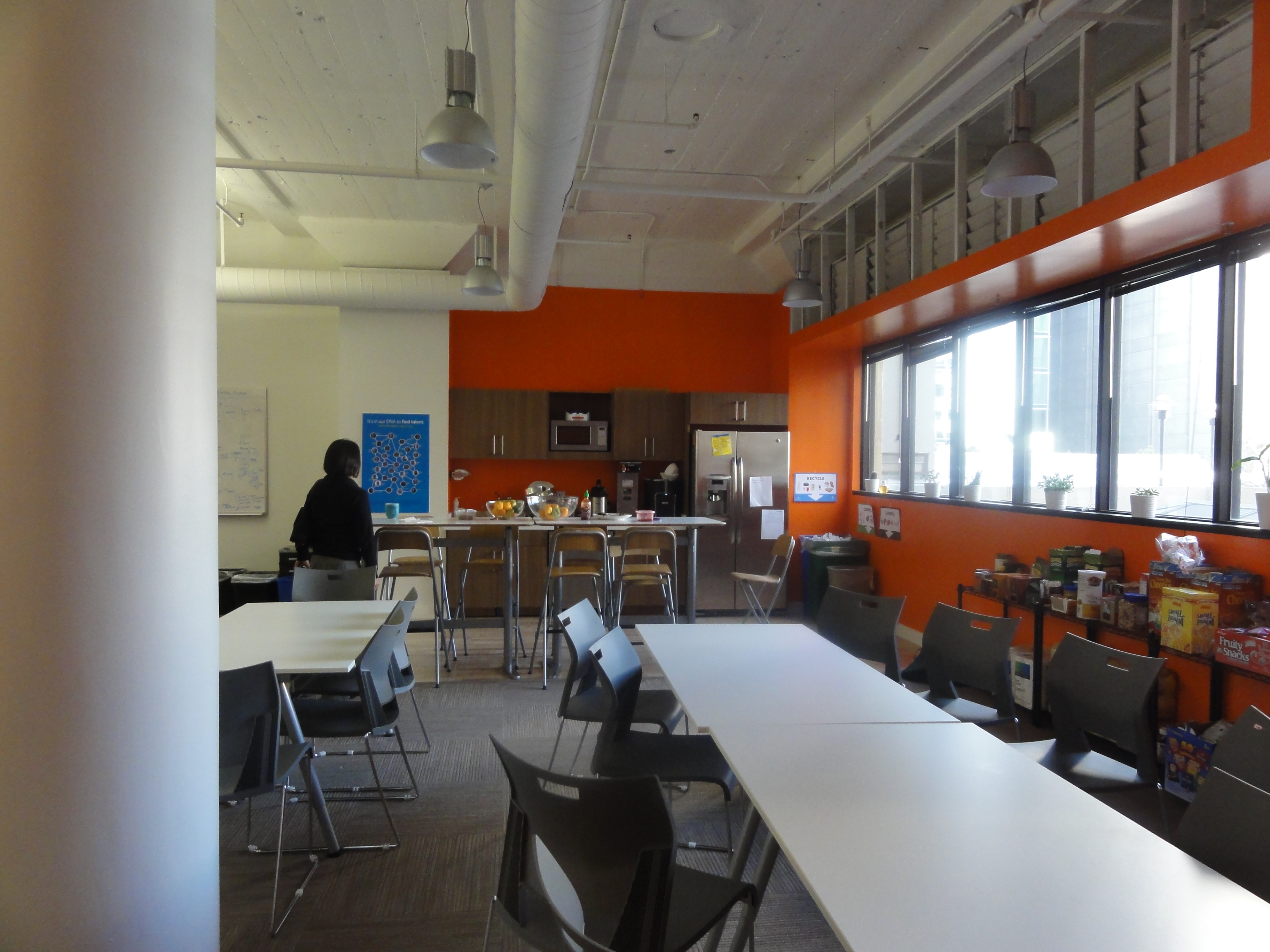
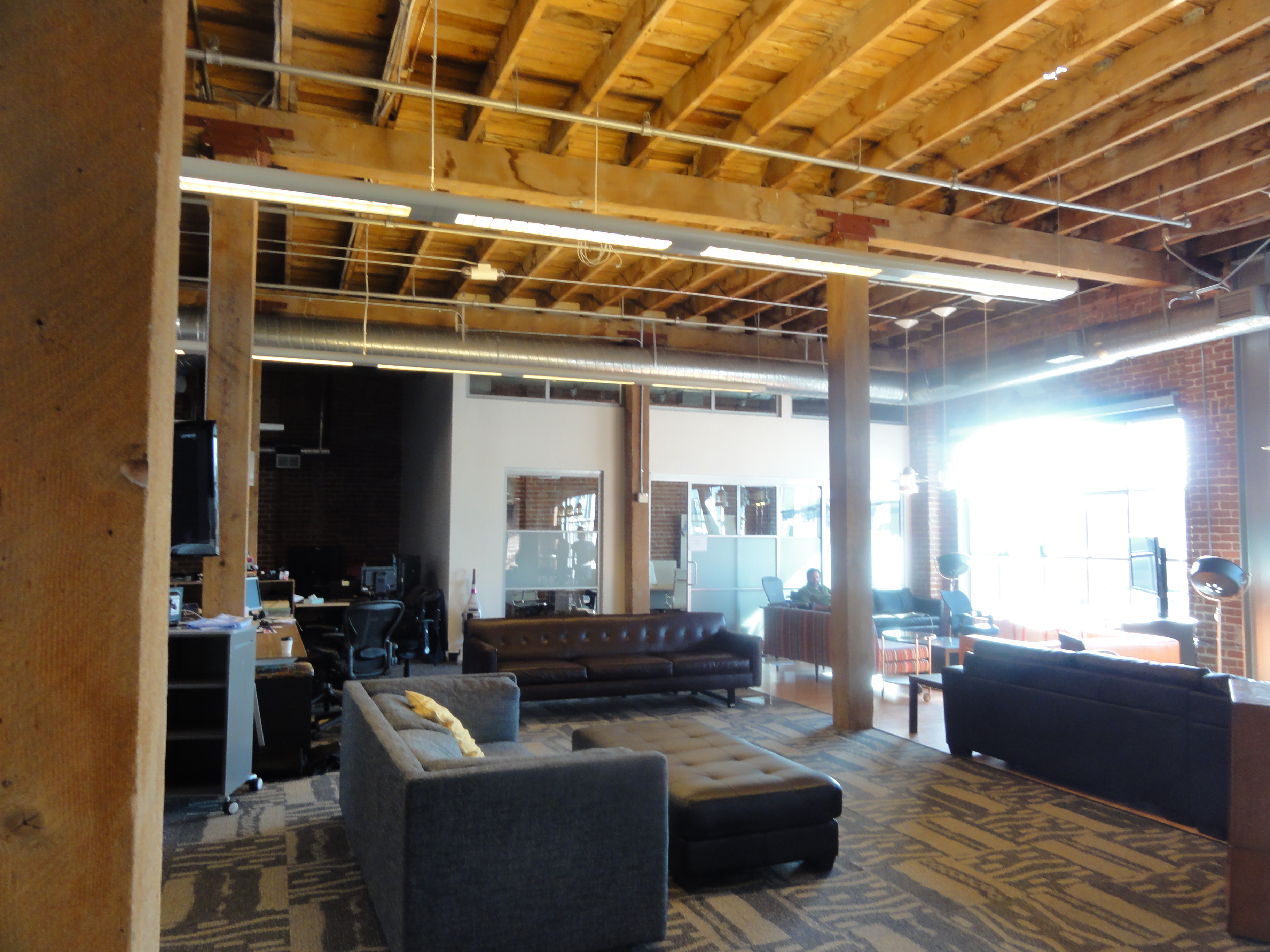
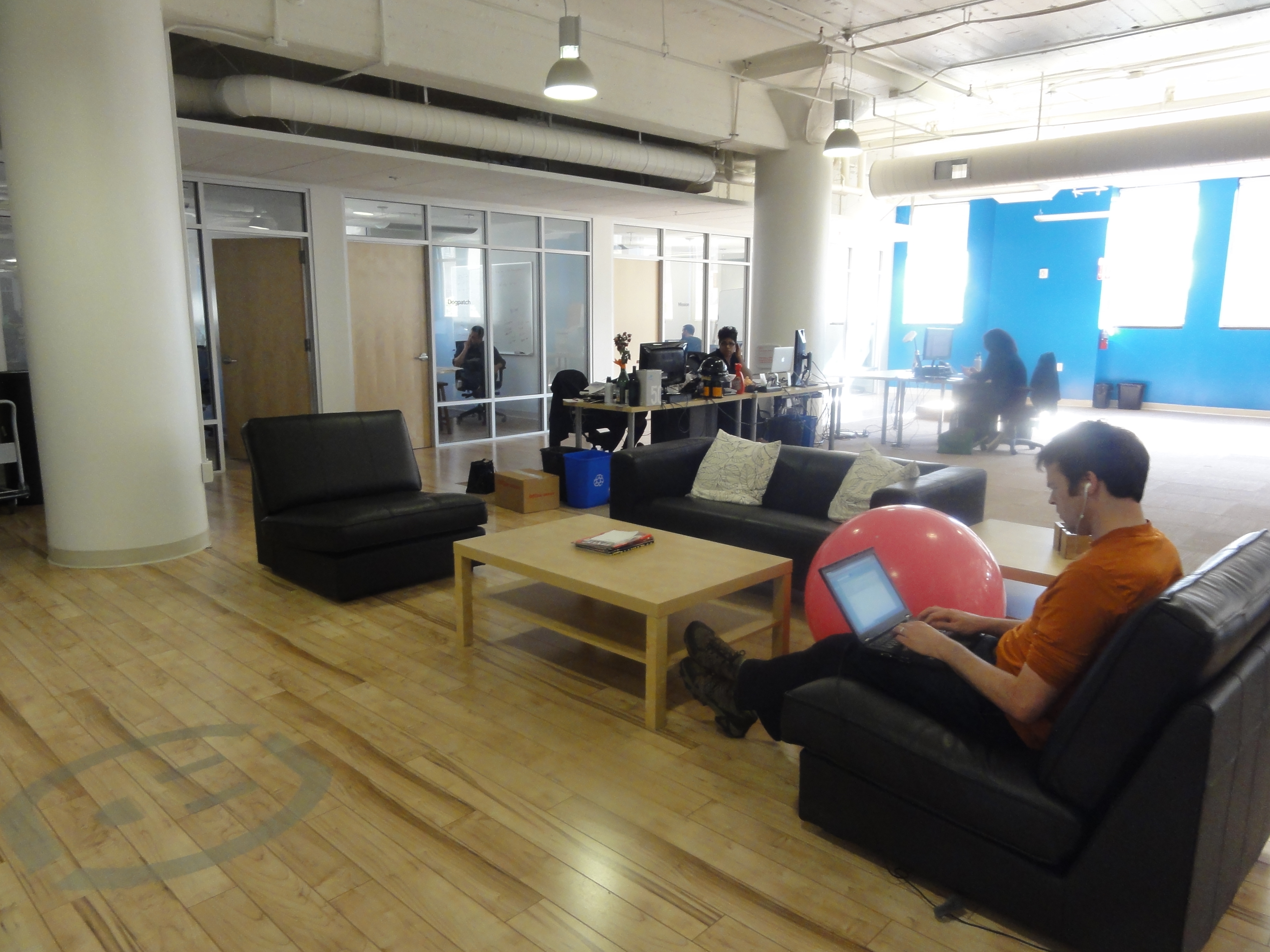
No matter how big the kitchen and break area are in our office suites, the tenants in San Francisco’s South of Market (SoMa) expand them.  Tech tenants are designing more informal work areas and collaboration areas within their space.  These spaces serve as an internal coffee shop or lounge.  These areas can also provide an alternative space from the rows of workstations or tables for employees to work.  Due to the variety and design in these suites, it can be hard to differentiate whether one is in a hotel lobby, coffee shop, fraternity house, or office.  Some tech firms host group lunches to encourage collaboration and require a dining space within an office suite to accommodate this activity.

Here are several pictures from our recent suites ranging from 10,000 to 12,000 square feet displaying these new, collaborative additions.

Oversized Break Area and Kitchen

Dining Area for a 12,000 SF Tenant

Couches for Informal Work Area

Working on a Couch in the Reception Area

From the Dark Days in SoMa to a Bright, Booming Future

In 2003, after the dot-com bust, PMI sensed an amazing purchasing opportunity in San Francisco. The area south of Market, known as SoMa, had vacancies reaching upwards of 40%, leasing brokers  began describing the area as “toxic.” SoMa looked like a promising area to recreate the magic acquisitions PMI assumed in the Los Angeles Westside during the mid-90s property grab.

By 2003, entertainment, advertising, and media companies on the Westside of Los Angeles had helped the area stage a rapid comeback from the tech crash. Late in 2003, PMI sold a 75,000 square foot Santa Monica creative office property to a Texas-based realty pension adviser. It was the first time an institutional buyer purchased a Westside creative office building. Soon after, the buying frenzy started and creative offices were being bought and sold at record prices. Comparatively, in SoMa during 2003 and 2004, only residential converters were buying creative office buildings and for under $125 per square foot.

PMI targeted San Francisco as a prime place to purchase creative office buildings for several reasons:

  1. The city has an incredibly large workforce of highly educated individuals.
  2. The city has one of the greatest concentrations of software engineers in the world.
  3. Two of the top universities in the country are located in the area.
  4. The city is dominant in venture capitalism.
  5. We took into account Richard Florida’s “Creative Class,” in which he argues that the world’s power and wealth will be concentrated in super regions of knowledge workers. We agreed with his theory and believed San Francisco  fit the paradigm perfectly.
  6. We considered the study of the history of innovation, which shows that the discovery of disruptive technology tends to end in a bursting of bubbles and is followed by an even greater and more mature expansion of the technology (a cycle that can happen many times).

While San Francisco seemed a great arbitrage, we were too frightened to buy anything in 2003. It wasn’t until late 2005 that we bought our first property, with the tenants and cash flow in place at the time. The deals were not as good as buying empty buildings, but they were a lot better than the creative office deals on the Los Angeles Westside. Rents climbed from $22 modified gross per square foot in 2005 to $36 modified gross per square foot in 2007and then collapsed below $22 modified gross per square foot in 2009.

With rents at an all time low and a building half vacant, we went on a search for the best start-up companies we could find and made them deals they could not refuse. Our first two takers were Eventbrite and Yammer. In another building, we leased a space to a startup called Twitter.

As described in this article from the San Francisco Business Times, things got much better in San Francisco. Rents are now well over $40 modified gross per square foot. The arbitrage between San Francisco and the Los Angeles Westside is no more. REITs and institutional investors dominate the business now.

“My warning,” says Jeffrey Palmer of PMI Properties, “is that this is a very volatile business. At some point in the cycle–both on the rise and fall, what you are experiencing may be volatility.”

Creative Spaces for Creative Companies– Moxie Pictures

Photo taken from Memory Alpha Wiki article on Robert Legato

Robert Legato is a prominent name in the entertainment industry, specializing in visual effects and post production for such films as The Departed, Interview with a Vampire, Apollo 13, Avatar, Titanic, and most recently, Hugo. His skill has earned him a dozen nominations and academy awards for Visual Effects in the movies Titanic (1997) and Hugo (2011). Once part of Moxie Pictures, a former tenant at PMI’s 2644 30th Street in Santa Monica from 2006 to 2008, PMI is proud to have been home to this visual effects wizard and congratulates him on his most recent Oscar.