Architectural Features of Hipster Design in Northeast Los Angeles

The article discusses the design features used by flippers who sell to hipsters in Northeast Los Angeles

“I wanna inject a little bit of youthfulness,” says Jones, “a little bit of modern into it, so what I’m looking for are these sort of modern elements juxtaposed with this vintage thing, a modern-vintage hybrid.”

Why I’m Fine With the ‘Hipster Flip’ Phenomenon – Los Angeles – Arts – Public Spectacle.

PMI Launches PMI Creative Multifamily

PMI has launched its new company to acquire, renovate, and convert multi-family properties into creative housing spaces.  PMI will utilize many of the techniques and skills in its creative office division and apply them to apartment living to create new and different rental housing experiences for urban dwellers.  PMI already has projects under way in Echo Park, Silver Lake, and Hollywood, California.

Handles are in and knobs are out in new apartment kitchens

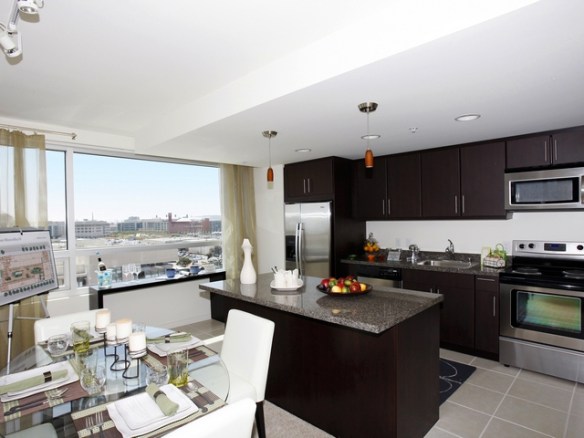
I have noticed more use of wide handles on kitchen cabinets and less use of knobs.  In Bravo’s new reality show, Start-ups: Silicon Valley, young attractive start up hopeful Kim Taylor shows off her kitchen in her Mission Bay apartment at the Avalon.  The apartment is typical of most new apartments:  espresso cabinets with long silver brushed handles, open to living space, granite or Cesar stone counters, stainless steel appliances, and an eating bar:

avalon kitchen kim apartment

Los Angeles Rents to Spike in 2013 if No Economic Downturn

Apartments in Los Angeles are still recovering from the downturn in late 2008.  Vacancies continue to decline and according to many surveys, now hover in the low 3% range.  Many sub-markets are actually below 3%.  According to PMI’s research, the last time apartment vacancies fell below 3% (in 1997 and 2006), strong rent increases followed.  The U.S. economy grew strongly in both 1997 and 2006, and we don’t know if we can say the same thing about 2013.  Rent growth may not be nearly as strong in 2013 as in those years.

However, Los Angeles vacancies are likely to fall below 3% if the economy does not take a turn for the worst.  As I result, one could expect rents to increase 10% over the next 18 months.  Indeed, several Los Angeles owners have experienced record low vacancies this year (1 to 2%).  Unlike the office market, where owners will incur high vacancy rates to achieve very high rents, apartment owners will allow their occupancies to drift down to very low levels before testing rents.  Apartment owners tend to be more cash flow sensitive, and apartment tenants tend to be very rent sensitive.  After a year of very low vacancies, apartment owners will begin to explore and test rents or eliminate concessions.

Different reports show that job prospects for young adults have improved.  This has encouraged them to start households after many years of living with roommates or their parents.  This trend also coincides with a move back to urban centers where apartment living is common and convenient.  Very little in the way of significant new apartment supply will be delivered during 2013.  Although home sales and prices are likely continue to improve also in 2013–residential financing still remains very difficult.  A move in the economy will either improve this forecast if positive or negate it if negative.

Gentrification of Rose Avenue in Venice

PMI has a creative office building on Rose near Main Street and the new Google offices.  The property was always a performer for us because of its proximity to the popular Main Street in Santa Monica on its north, Abbot Kinney in Venice on its south, and Venice Beach on its west.  If you went a few blocks East on Rose Avenue, the area become seedy with homeless, crime, and run down retail.  In the last six years, this area has transformed and gentrified into a new hip location.  The Los Angeles Times article describes this transformation.

Venice’s new bloom – Los Angeles Times.

More Young American Adults Leaving the Nest

This recent LA Times article provides more evidence that the economy is improving and in turn causing apartment rentals to improve.  The article discusses new research showing that young adults who doubled up with their parents are getting jobs, leaving the nest, and renting apartments.

Other reasons cited for the apartment market’s strength include former foreclosed homeowners converting to rentals, potential new homeowners choosing to rent, and a movement back to the urban centers where renting is more convenient and economical.

However, the article shows that rental housing is strongly connected with the job prospects of young adults who have benefited more statistically from this recovery.  It is a double edged sword.  A reversal of the recovery could upend the rental market’s strength.

Check out the article on the LA Times website here.

The Growth of Kitchens and the Death of Formal Dining in New Urban Housing for Gen Y

In new mutlifamily urban housing in Los Angeles, developers are building bigger kitchens and leaving out formal dining rooms.  In other words, the kitchen, dining room, and living room are morphing into one large room.

The new Archstone Apartments in Venice (Los Angeles, California), feature knockout open kitchens. The kitchen forms the center piece of one great room for living, dining, and food preparation.  A breakfast bar area provides the only place in the apartment for sit down dining.

One bedroom apartments featuring this 1,000 square foot floor plan start at $4,000– a hefty price to pay for the changing layout of urban living.  With the evolution of Gen Y’s preferences regarding living spaces, separate rooms for entertaining, dining, and living are no longer needed.  PMI will feature these designs in their new, creative multifamily projects.

Photo courtesy of Archstone Apartments

Debt Service Coverage Ratios And Re-Margining Covenants in Commercial Loans

There has been an alarming increase in lenders demanding debt service coverage ratios, and/or the right to demand loan pay downs if a property’s appraised valued declines.  This is also called” re-margining.”  If an owner’s cash flow  or property’s value declines beyond a certain point, lenders want the right to require owners to make forced pay downs on their loans or post additional security.  These pay downs will likely come at a time when the owner is unable to obtain alternative financing and when his cash resources will already  be strained by falling occupancy as well as  rents and increases in tenant improvement and leasing costs.   This is similar to forcing a homeowner to pay down his loan if he loses his job.

The lender’s right to require pay downs can occur even if the owner is current on all his loan payments and obligations.  Such a provision demands even lower leverage and outsized capital reserves from a conservative investor.  Where will the equity for a loan pay down come from?

Office values are extremely volatile and have exhibited declines ranging from 40% to 70% during recession periods.  Defaults and foreclosures will only multiply if banks require owners to make loan pay downs during a recession.   Conservative investors should resist such clauses.

Represent LA: Geographical Breakdown of Startups in Los Angeles

Represent LA is a website that maps the location of new tech start ups and investors in Los Angeles.  The map is useful because it allows people to browse according to location, investors, or company name.  With Represent LA, it’s easy to see which areas have the highest and lowest numbers of startups, which could be a factor for a new startup in their search for leasing creative space.  The creators of the website also promote a sense of community and support by offering up the ability for companies who do not see their business on the map to submit their information to be added.

The geographical breakdown of startups within Los Angeles can be determined by exploring the Represent LA map.  Currently, downtown Santa Monica and Venice have the highest concentration of start ups, followed by the area east of downtown Santa Monica.  Surprisingly, Santa Monica airport area has many startups while Playa Vista does not.

Downtown Los Angeles, Hollywood, Culver City, El Segundo, Pasadena, Tri-Cities, and the greater South Bay have moderate levels of start ups.  San Fernando Valley, Century City, Westwood, and the Beverly Hills area contain low levels of startups.  The fewest startups, however, are located in Malibu, South Los Angeles, Mid-City, East Los Angeles, and the San Gabriel Valley.

It seems that Silicon Beach is continuing to grow as an area that start ups are drawn to, which is consistent with the articles we have shared about in past.  Conversely, Pasadena’s start up activity seems to be on the decline.  Represent LA’s map is a great way to find start ups, coworking space, investors, or consulting firms in Los Angeles and will hopefully be another resource tech start ups will be able to efficiently use.

How The Supply of Creative Office Space Can Expand Very Rapidly

The 2001 LA Times article, “More Westside Office Space Turns Up in Latest Tally,” discusses a study in 2001 by Grubb & Ellis that showed a significant underestimated supply of Westside office space due to creative office conversions.

Warehouse conversions to creative office space are small and numerous, making it extremely difficult to track. Likewise, supply statisticians may also underestimate  the supply of creative office space.  Conventional office space can be converted to creative office space for $50 to $80 per square foot in two to eight months by opening ceilings, exposing the structural architecture, and installing creative office features.  Because it is so easy for traditional office space to be converted into a creative office, the supply of creative office space can expand rapidly.

In Los Angeles, brokers call these spaces “soft creative” because they lack the full intrinsic drama of single level converted warehouses but can still provide the creative purpose for certain companies.  Currently, in San Francisco, owners are working feverishly to convert conventional offices as well as older moth ball buildings into creative spaces and vacant land into new highrise creative properties.

When it comes to creative space production, we are all “Houstons”. The last time around, the real estate investment and leasing community failed to accurately account for the full amount of creative office space.  The industry needs to count the supply more accurately this time and hope the demand increases and sustains with equal fervor.