Unknown's avatar

About PMI Properties

PMI is a thirty year old property investment company located in Beverly Hills/Bel Air that invests in commercial and residential real estate. Since its founding in 1978, PMI Properties has closed over $500 million in office, shopping center, industry and apartment properties throughout Los Angeles and San Francisco. PMI's most recent endeavors have focused on pioneering creative office suites in office buildings and converted warehouses.These properties have been primarily located in Los Angeles and recently in San Francisco. PMI had its roots in investing in apartments, but more recent investments have focused towards offices, creative offices and converted warehouses. PMI was the first to pioneer a new, creative suite in office buildings with its proprietary "lifestyle suites," which featured skylights, partial hardwood floors, designer lighting, raised ceilings, interior glass, and other upgrade features. PMI pre-built the suites in an efficient and generic floor plan that not only achieved a premium, but also rented faster than suites requiring build-to-suit modifications. PMI was also one of the first to convert warehouse industrial facilities into flex creative space prior to the Internet boom. Today, PMI's suites are some of the most coveted creative offices on the market. Subscribe to get our newsletter and blogs for free! http://eepurl.com/hG0V2

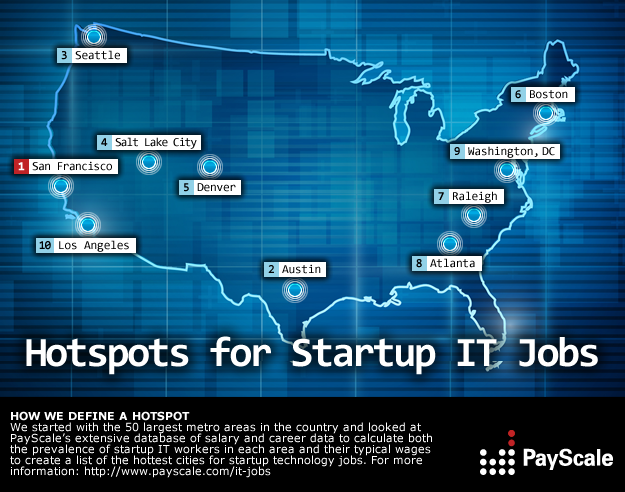
Map: The hottest spots in the U.S. for startup tech jobs – GeekWire–Los Angeles Continues to Lag.

hitechhotspots_image03

This article below from last year shows Los Angeles as low as number 10 as a hotspot for tech startups.  This contrasts with the dot com boom where Los Angeles was a solid four.  A lot depends on how one slices and dices data.  When you look at Los Angeles Orange County as a region, it ranks number 3 to 5 in venture funding ( depending on the quarter) according to Money Tree Price Waterhouse.  However, the rank falls perciptiously when you look at just  software venture funding as this area is driving the urban tech boom.  A recent article by Richard Florida put Los Angeles.  An article by Richard Florida, published in the Atlantic Cities (June 13, 2013), America’s Leading Metros for Venture Capital, shows the Los Angeles Metropolitan Area as number 5.

Map: The hottest spots in the U.S. for startup tech jobs – GeekWire.

Culver City Evolves from Quiet Community to Urban Area; Gains a ‘Media for the Web’ Cluster

Maker Studios, a company that produces media content for the web, just signed a 50,000 square foot lease at 3562 Eastham Drive in Culver City.  Maker Studios joins other recent media-for-the web content companies in the Hayden Tract.  Several companies include Four Wall Studios, Mahalo, and Popsugar.  The cluster of these firms gives rise to a small community that could encourage other firms in this emerging industry to also seek office space in Culver City.

The success of these firms would also help create a new source of demand for Culver City creative space.  These media-for-the web firms join other creative office companies in Culver City that include digital advertising, entertainment, old media, and software firms.  A recent article from the Los Angeles Times discusses the success of Culver City and its challenges.  The addition of 1100 parking spaces at the Washington and La Cienega Expo stations helped convince these firms to locate in Culver City.  As some tech companies scale to 10 employees per 1000 square feet, the Expo line may provide one of the few ways for firms to help provide an alternative to parking to accommodate such density.

Culver City has transformed into one of main areas on the Westside that many tech and media tenants have been drawn to for creative office space.  In the second quarter of 2012, Culver City  had a net absorption of 16,000 square feet, with the asking rates for Class A and Class B space remaining constant from the first and second quarters of 2012.

Los Angeles Becomes Center for Digital Advertising Firms built for the Internet age

In general, Los Angeles as a whole as well as West LA, are lagging behind other major cities in digital technology growth.  However, one area that is booming here is digital advertising.  This specific market is where Los Angeles, especially the Westside, has a dominant role in the this technology.  A recent LA Times article was published that discussed this phenomenon.  In the article, one of PMI’s tenants, Omelet, in Culver City was featured.  However, in the same building, two other digital advertising firms reside in a three tenant building.  See the Los Angeles Times article below from today.

Digital advertising firms are built for the Internet age – latimes.com.

Office Boundaries and Open Spaces

Open floor plans, collaborative spaces, and no partition work areas are not always optimal.  Some people need quiet areas and some people need the ability to talk on the phone or with others.  This article from the Urban Land Institute discusses the balance that must be reached with such open collaborative spaces between open work areas and private areas.

Why Tech Firms are Moving to San Francisco

In a recent San Francisco Business Journal article, Terry Cunningham, President and General Manager of Evault, a cloud back-up and recovery service, explained why the company moved its 100 person Emeryville offices to San Francisco.

Cunningham said one of the great advantages of relocating to San Francisco is that he has a “wider pool from which to recruit, because more people want to work in the city than in the South Bay, and the city is centrally located, making it easier commuting from the East Bay and other spots.”

Plus, Cunningham said San Francisco is just “hipper” than the South Bay.

“San Francisco is cool, and we were just in a wasteland down south.  There was nothing cool in the particular location we were in.  You had to get in your car to drive for lunch.”

Cunningham has been reveling in the walkabillity of his new neighborhood.  The environment, coupled with the new office’s design, makes for a “more intimate working culture, in which people get to know each other better,” he said.

The Future of Office Workspace: Less is More

Some may argue that office space in West Los Angeles has become too plentiful. Soft markets, when there is an excess of supply over demand, occur about 80% of the time.  Conversely, tight markets occur about 20% of the time.  Los Angeles brokers and building owners have to face the reality that demand has been decreasing over the last two decades.  This industry is very mature, and it may be time for a change.  As this article from CoStar Group points out, one of the changes that should be made in office design is to accommodate the needs of the next workforce generation.  Unfortunately, the next generation demands less, not more, office space per employee.

To add value to their properties, Westside Los Angeles office owners will need to design spaces that operate with greater efficiency.  They will also have to account for greater densities of employees in these spaces.  These two tasks need to be accomplished simultaneously while continuing to foster an interesting and creative atmosphere.  These environments will further promote collaboration and will have a positive effect on employees rather than sticking them in cubicle farms.

The Westside does not need more space, but simply better quality of space. Despite a 20% vacancy rate in Playa Vista, developers are planning to bring on another million square feet of office space in the next couple of years.  If the future workforce demands less space, one may question why this is being planned.  Investors, developers and owners have to ask themselves if they are meeting a tenant demand or investor demand.

Silicon Beach Startup BetterWorks Has Shut Down

TechCruch has reported that BetterWorks, a startup based in the Silicon Beach area has shut its doors at the end of May.  This is a giant blow to the Silicon Beach startup movement in Los Angeles.  Silicon Beach needs a startup that can stand the test of time and be a big hit in order to start competing with other tech hotbed areas in the country.

Kitchens, Lounges, and Break Areas Expand in SoMa Offices

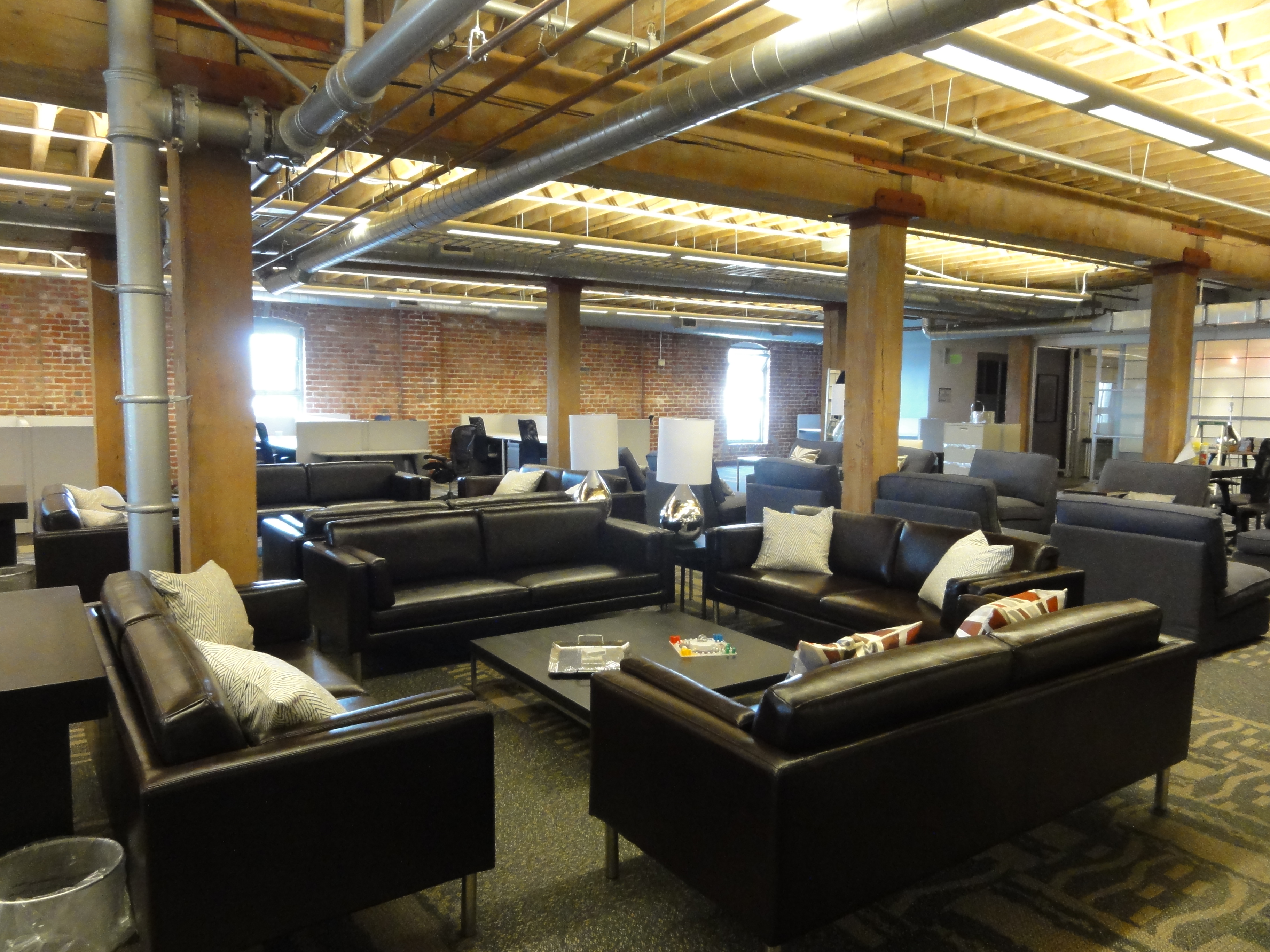
Couches and Lounge Chairs Provided for Employees

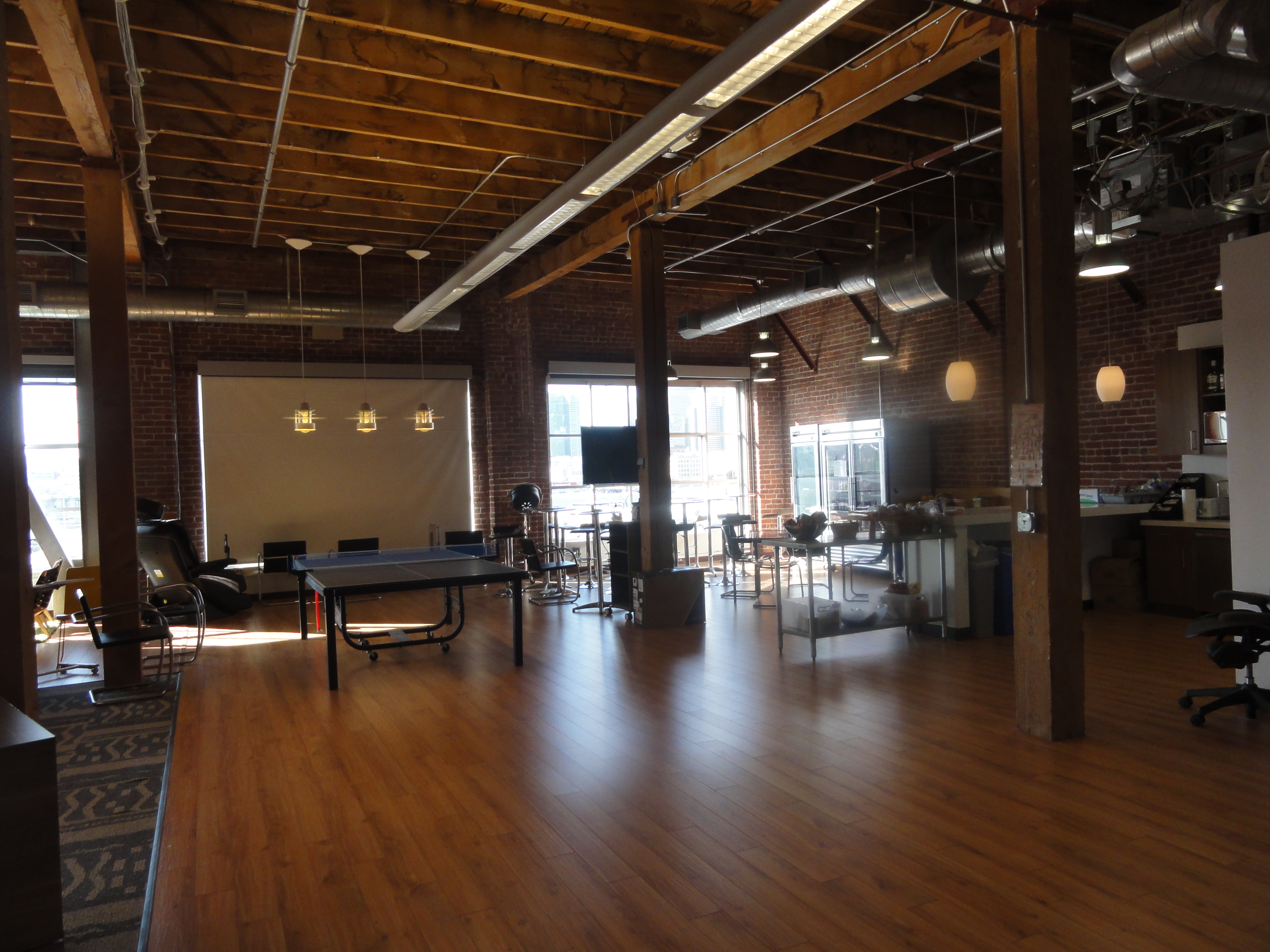
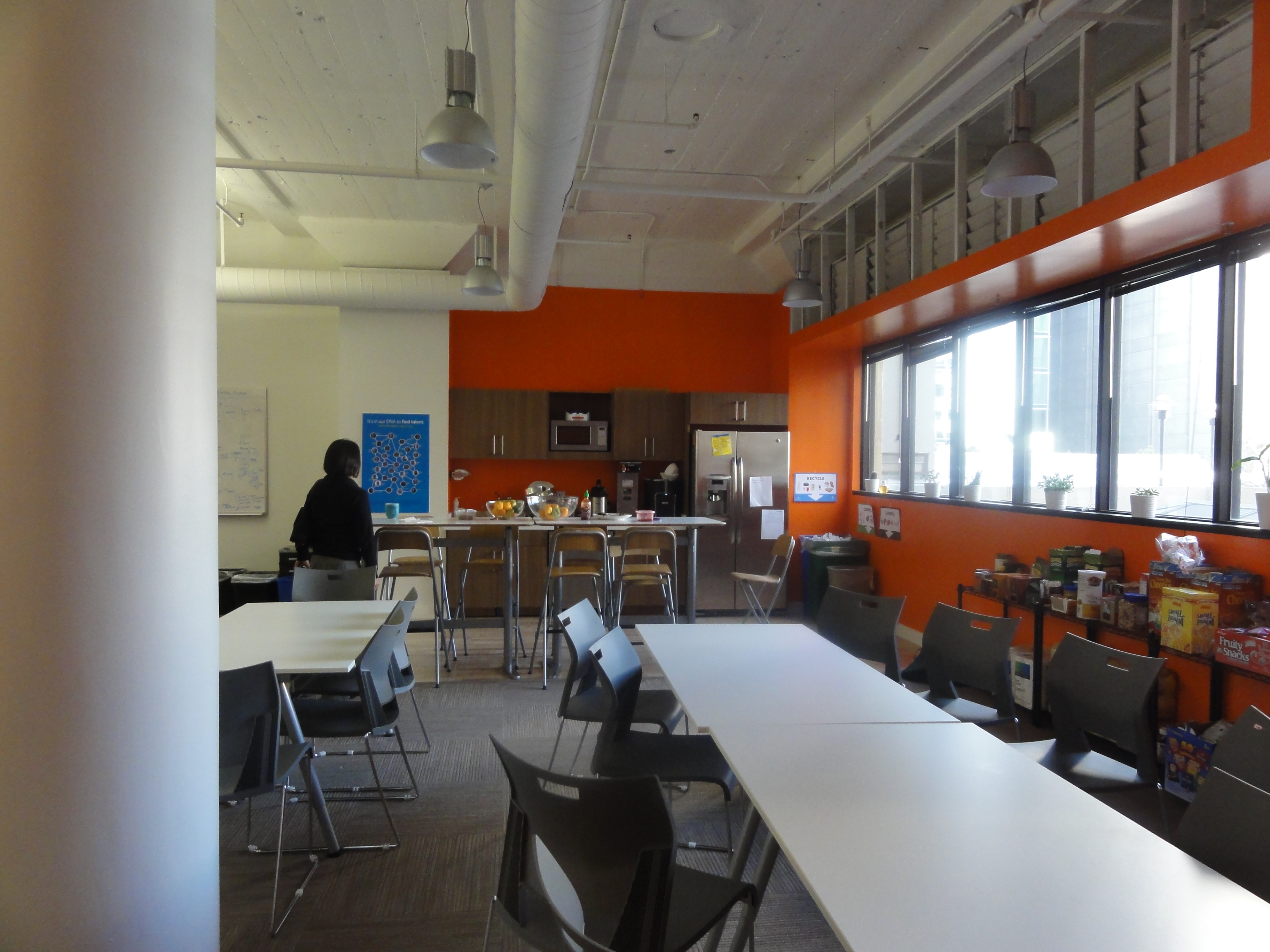
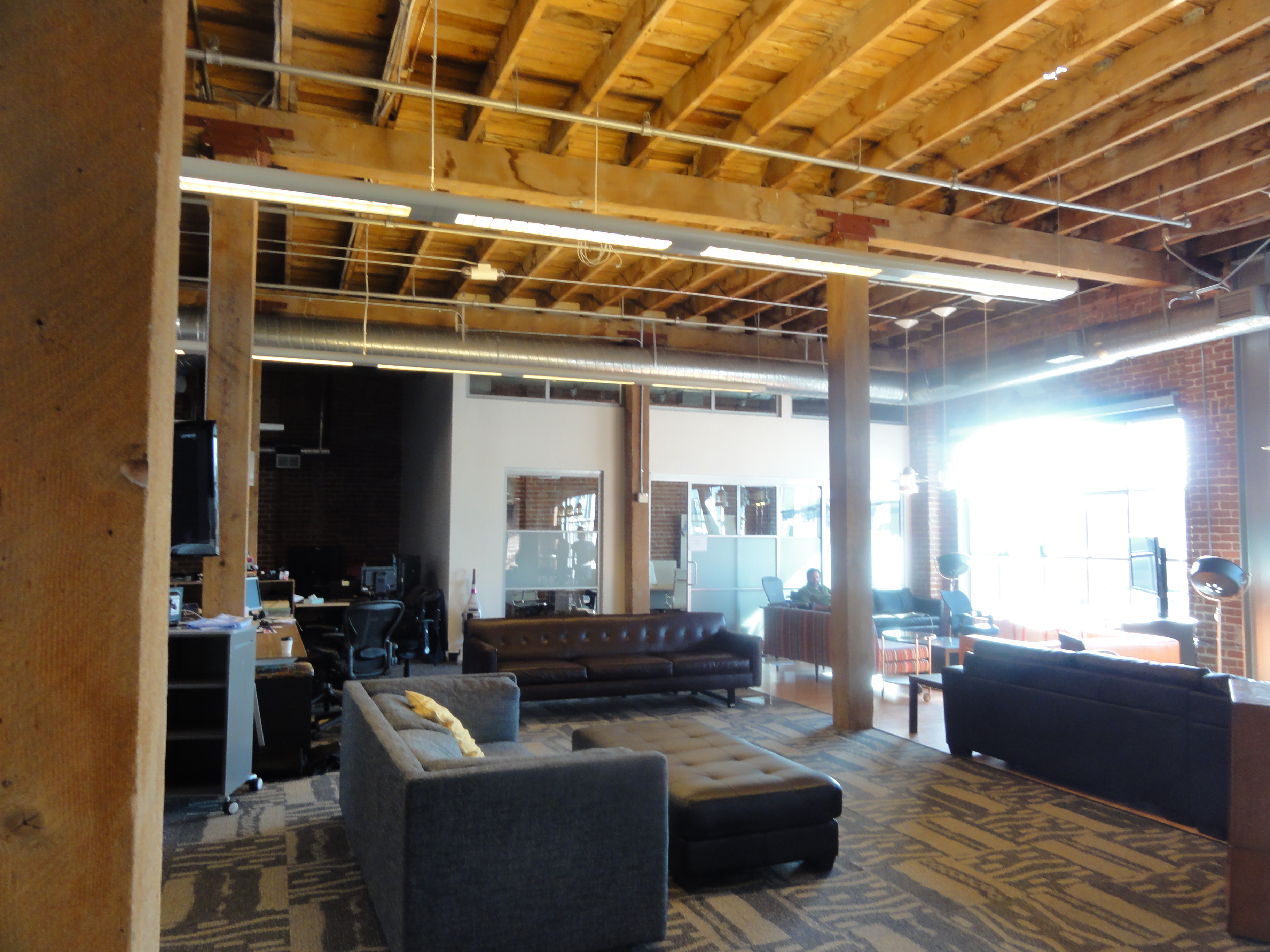
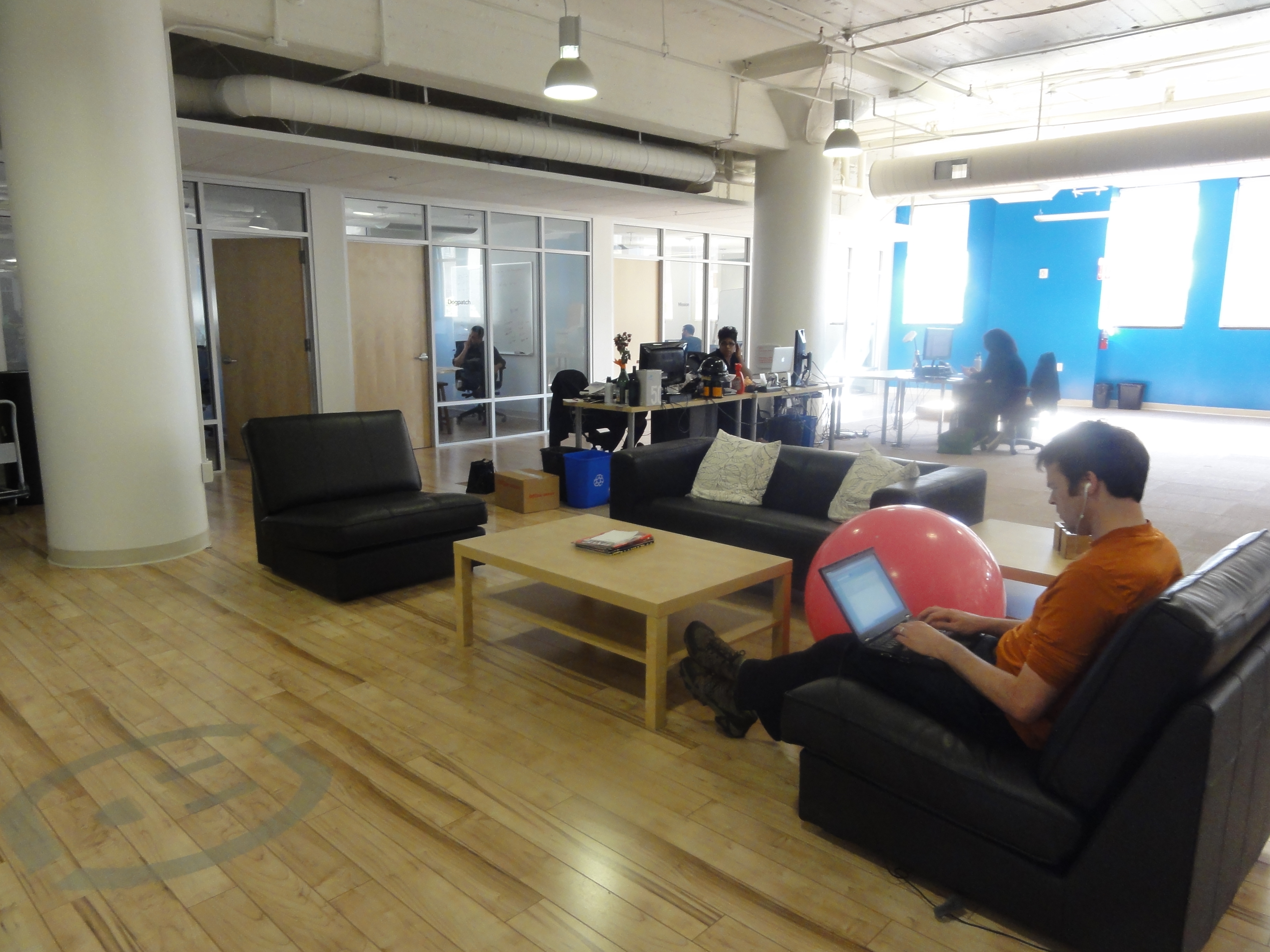
No matter how big the kitchen and break area are in our office suites, the tenants in San Francisco’s South of Market (SoMa) expand them.  Tech tenants are designing more informal work areas and collaboration areas within their space.  These spaces serve as an internal coffee shop or lounge.  These areas can also provide an alternative space from the rows of workstations or tables for employees to work.  Due to the variety and design in these suites, it can be hard to differentiate whether one is in a hotel lobby, coffee shop, fraternity house, or office.  Some tech firms host group lunches to encourage collaboration and require a dining space within an office suite to accommodate this activity.

Here are several pictures from our recent suites ranging from 10,000 to 12,000 square feet displaying these new, collaborative additions.

Oversized Break Area and Kitchen

Dining Area for a 12,000 SF Tenant

Couches for Informal Work Area

Working on a Couch in the Reception Area

Video Content Companies Make their Mark in West Los Angeles

Los Angeles is behind such cities as New York, Boston, and San Francisco in digital technology. However, in the niche market of video content for the web, Los Angeles may be number one.  Los Angeles is flexing its content muscle to spawn startups involved in original content made for the web.  This movement is as old as the dot-com boom itself.  Since high-definition web video is so inexpensive to create, there is a renewed interest in producing new and innovative original programming for the web.  YouTube started adding over 100 new channels with all original content creators in 2011.  Netflix launched an original show on its platform in February of 2012, with plans to add more programming in 2013.  Hulu.com announced it will also start creating original programming for its users.  Many users of both sites have expressed their excitement and support of this creative action.

Web content companies are forming in different pockets all around Westside Los Angeles and Hollywood. Another prominent area where web content companies are clustering is around the Hayden Tract in Culver City.  PMI recently leased 13,000 square feet to Mahalo.com and 15,000 square feet to Sugar Publishing Inc.  Mahalo.com is a video and web company specializing in instructional content.  Recently, Mahalo started producing instructional applications for the iPad.  Sugar Publishing, Inc. is the parent company of the popular video site Popsugar.  Maker Studios, a YouTube content company, recently leased 18,000 square feet a few blocks away from Mahalo and Sugar at 5877 Rodeo.  According to this article from The Los Angeles Times, Los Angeles billionaire Patrick Soon-Shiong’s Four Wall Studios leased space at Conjuctive Point, adjacent to Mahalo and Sugar Publishing, and is allegedly building a $20 million studio in Culver City.

YouTube also recently leased 30,000 square feet for a studio in Playa Vista.  One of our previous tenants, Machinima.com, occupies 30,000 square feet in Hollywood.  They started with 150 square feet in one of our creative executive suites at 10951 Pico Boulevard in 2007.  They are now the most watched channel on YouTube.

Due to the fact there is so much interest in creative office space on the Westside, and especially in Culver City, now is the perfect time for solutions to be developed and executed in regards to the demand for parking.  Culver City must work to help supply the parking these incoming companies require.  Tenants are starting to make parking a large priority before they lease office space.  A broker representing one 50,000 square foot tenant recently called PMI’s offices to ask advice on how to handle their parking needs if they leased space in the Hayden Tract.  Culver City expressed a desire to ameliorate the parking situation and has already made some commitments to facilitate this resource.  In addition, improving the lunch time amenities for the increasing workforce would also be beneficial.

Some large content firms are rumored to be sniffing around Culver City for creative space.  We can’t say at this time if any or all of these firms will be successful in the long run.  PMI has had their share of tenant failures and successes in the past.  We are privileged to share that some of our previous tenant successes have included Twitter, Yammer, Eventbrite, Stylespot, and Applied Semantics.  Despite the challenges PMI has faced in its leasing history, we feel that leasing space to any growing technology company is worth the risk in this economy.

From the Dark Days in SoMa to a Bright, Booming Future

In 2003, after the dot-com bust, PMI sensed an amazing purchasing opportunity in San Francisco. The area south of Market, known as SoMa, had vacancies reaching upwards of 40%, leasing brokers  began describing the area as “toxic.” SoMa looked like a promising area to recreate the magic acquisitions PMI assumed in the Los Angeles Westside during the mid-90s property grab.

By 2003, entertainment, advertising, and media companies on the Westside of Los Angeles had helped the area stage a rapid comeback from the tech crash. Late in 2003, PMI sold a 75,000 square foot Santa Monica creative office property to a Texas-based realty pension adviser. It was the first time an institutional buyer purchased a Westside creative office building. Soon after, the buying frenzy started and creative offices were being bought and sold at record prices. Comparatively, in SoMa during 2003 and 2004, only residential converters were buying creative office buildings and for under $125 per square foot.

PMI targeted San Francisco as a prime place to purchase creative office buildings for several reasons:

  1. The city has an incredibly large workforce of highly educated individuals.
  2. The city has one of the greatest concentrations of software engineers in the world.
  3. Two of the top universities in the country are located in the area.
  4. The city is dominant in venture capitalism.
  5. We took into account Richard Florida’s “Creative Class,” in which he argues that the world’s power and wealth will be concentrated in super regions of knowledge workers. We agreed with his theory and believed San Francisco  fit the paradigm perfectly.
  6. We considered the study of the history of innovation, which shows that the discovery of disruptive technology tends to end in a bursting of bubbles and is followed by an even greater and more mature expansion of the technology (a cycle that can happen many times).

While San Francisco seemed a great arbitrage, we were too frightened to buy anything in 2003. It wasn’t until late 2005 that we bought our first property, with the tenants and cash flow in place at the time. The deals were not as good as buying empty buildings, but they were a lot better than the creative office deals on the Los Angeles Westside. Rents climbed from $22 modified gross per square foot in 2005 to $36 modified gross per square foot in 2007and then collapsed below $22 modified gross per square foot in 2009.

With rents at an all time low and a building half vacant, we went on a search for the best start-up companies we could find and made them deals they could not refuse. Our first two takers were Eventbrite and Yammer. In another building, we leased a space to a startup called Twitter.

As described in this article from the San Francisco Business Times, things got much better in San Francisco. Rents are now well over $40 modified gross per square foot. The arbitrage between San Francisco and the Los Angeles Westside is no more. REITs and institutional investors dominate the business now.

“My warning,” says Jeffrey Palmer of PMI Properties, “is that this is a very volatile business. At some point in the cycle–both on the rise and fall, what you are experiencing may be volatility.”