Unknown's avatar

About PMI Properties

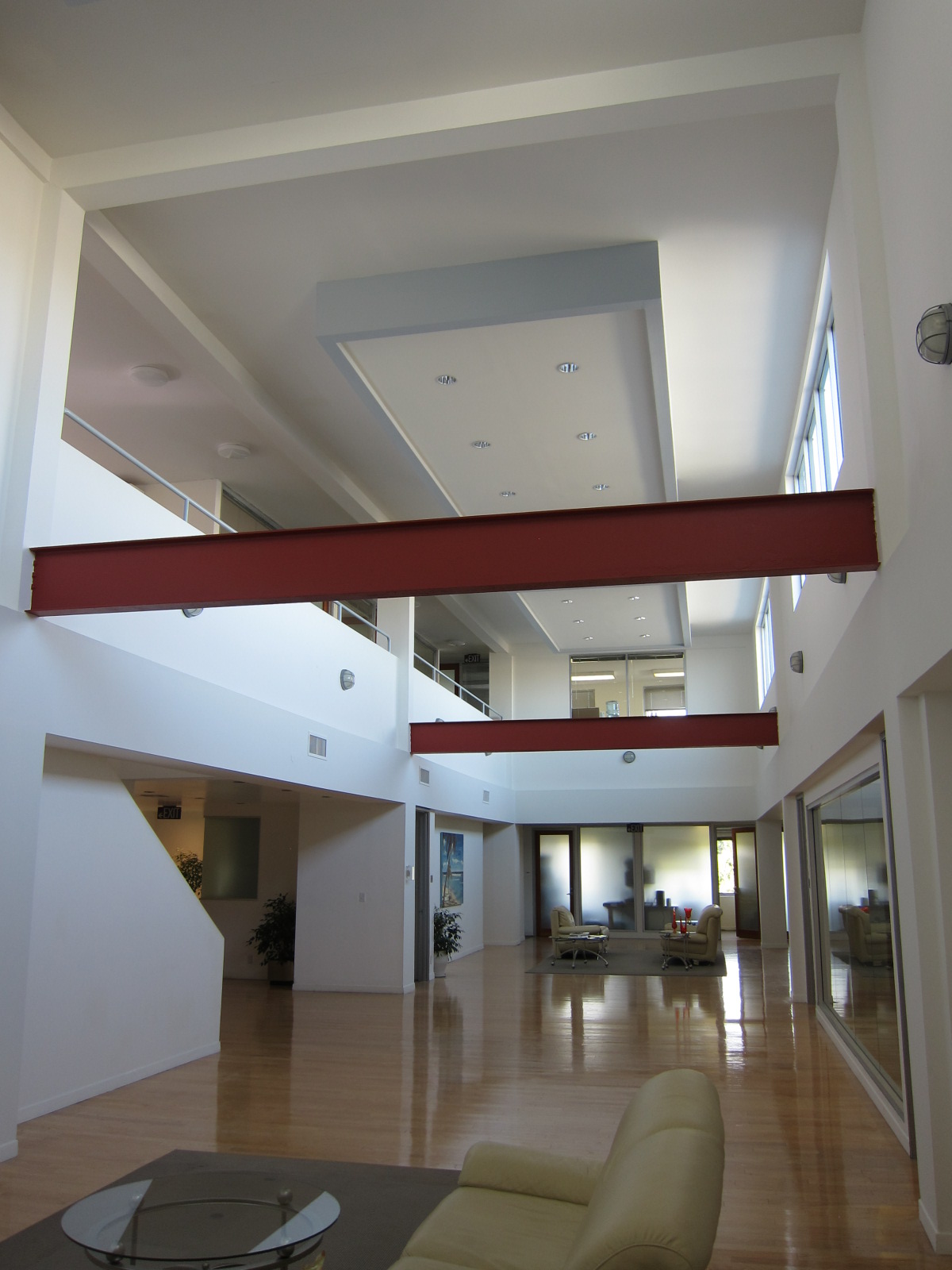
PMI is a thirty year old property investment company located in Beverly Hills/Bel Air that invests in commercial and residential real estate. Since its founding in 1978, PMI Properties has closed over $500 million in office, shopping center, industry and apartment properties throughout Los Angeles and San Francisco. PMI's most recent endeavors have focused on pioneering creative office suites in office buildings and converted warehouses.These properties have been primarily located in Los Angeles and recently in San Francisco. PMI had its roots in investing in apartments, but more recent investments have focused towards offices, creative offices and converted warehouses. PMI was the first to pioneer a new, creative suite in office buildings with its proprietary "lifestyle suites," which featured skylights, partial hardwood floors, designer lighting, raised ceilings, interior glass, and other upgrade features. PMI pre-built the suites in an efficient and generic floor plan that not only achieved a premium, but also rented faster than suites requiring build-to-suit modifications. PMI was also one of the first to convert warehouse industrial facilities into flex creative space prior to the Internet boom. Today, PMI's suites are some of the most coveted creative offices on the market. Subscribe to get our newsletter and blogs for free! http://eepurl.com/hG0V2

Creative Spaces for Creative Companies– Moxie Pictures

Photo taken from Memory Alpha Wiki article on Robert Legato

Robert Legato is a prominent name in the entertainment industry, specializing in visual effects and post production for such films as The Departed, Interview with a Vampire, Apollo 13, Avatar, Titanic, and most recently, Hugo. His skill has earned him a dozen nominations and academy awards for Visual Effects in the movies Titanic (1997) and Hugo (2011). Once part of Moxie Pictures, a former tenant at PMI’s 2644 30th Street in Santa Monica from 2006 to 2008, PMI is proud to have been home to this visual effects wizard and congratulates him on his most recent Oscar.

Forbes Blog Attempts to Crown Los Angeles Ahead of Silicon Valley in the Startup Race

We might be so bold as to say that Los Angeles surpassing Silicon Valley in the startup race is not going to happen.  However, this recent article in Forbes does not actually discuss the placement of Los Angeles or Silicon Valley in the startup race. Instead, it speaks of the resistance one marketing tech worker had in moving to Los Angeles from San Francisco.  Despite the misconceptions that some Silicon Valley residents may have about the tech and startup scene in Southern California, this article points out that there is a lot of promise in Los Angeles.  A good argument that is made in the article is if L.A. wants to gain a traction on a higher spot in the tech startup race, there needs to be more tech talent that is interested in entrepreneurship.

All differences aside, we have a lot of tech in Los Angeles.  If aerospace technology were to be included, we may blow away Silicon Valley.  During the dotcom boom, Los Angeles had the number four spot in venture capital funding behind Silicon Valley, Boston, and New York according to the National Venture Capital Association.  Guess What?  We still have the number four spot.  As the technology industry comes back as a whole, Los Angeles tech is coming back as well.  We are rebuilding the infrastructure we had during the dotcom boom.  Although some valuations may appear bubbly–venture funding does not even come close to rivaling the dot com boom.  Venture funding reached $99 billion in 2000 versus $28 billion in 2011.

Los Angeles will not catch up to the Bay area anytime soon in technology and startups, and conversely, the Bay Area will not catch up to Los Angeles in the movie and media realm.  Both have too much history, infrastructure, institutions, and alumni in each of their respective areas of domination.  Los Angeles can excel in the niche tech areas of content convergence, such as Hulu and Demand Media.  LA can also do extremely well in advertising and marketing tech (Adly), and ecommerce (Shopzilla, Fandango).

Incorporating Coffee Shop Ideals in Creative Office Space Design

An article from Gensler was published recently which discusses what we can learn from a coffee shop relative to the current design of office spaces.  One observation the article mentions is to have people sit facing away from walls.  When you go into a coffee shop alone and select a seat–you will typically take the seat with your back against the wall and facing out.  Gensler concludes that this is the way most people prefer to work.

The article further talks about this method being implemented in one of their studies with fantastic results.  The seating approach used has increased collaboration in the office.  The way people sit at their desks and can be seen by others allows people to better notice when someone else is available talk or work with.  With increased collaboration and respect among employees, this workplace becomes a more comfortable and enjoyable place to be.

The article also points out that different generations of people tend to exhibit the same tastes in regard to seating and working at a coffee shop.  This too, can be great for a company that is wanting to transition to a open plan.  Knowing that workers of different ages don’t greatly differ in their office style work space tastes will help make the decision to change the layout of the office an easy one.

There are seven points to this article to take into consideration in remodeling or designing creative office space.  Companies may experiment with these ideas and possibly make an effort to modify the office plan in order to increase collaborations and creativity throughout the workforce.

We have not tried any of these ideas out.  However, we have seen the importance of the kitchen and break area grow.  In one 12,000 square foot suite, we built two kitchen and break areas.  In another 10,000 square foot deal, the tenant refused to move in until the kitchen break area was totally finished because the tenant viewed it as a critical part of the space.

Opower, an Energy Efficient Software Company, is PMI’s Newest Tenant at Harrison Property in San Francisco

Our newest tenant on the second floor of 642 Harrison in San Francisco has a goal to make the world more energy-efficient.  It’s a pretty lofty goal for a company only founded in 2007.  Opower is a software as a service company that partners with utility companies to promote energy efficiency.  According to their website, Opower is a new customer engagement platform for the utility industry.  It reinvented the way utilities interact with customers—from the quality of the information provided to the way it’s presented and delivered.  It helps people use energy more efficiently and ultimately save money on their energy bills.  And it vastly improves the overall customer experience by making energy use personally relevant.  For example, when monthly invoices arrive at a customer’s home, they can see the average utility bill cost in their neighborhood, along with suggestions on how to reduce their energy consumption.  If they are well over the average compared to other homes in the area, they then have Opower’s suggestions right at their fingertips to help alleviate some of their energy costs.

Opower decided to PMI Properties’ 642 Harrison would be a great candidate for their next office because of its size and prime location.  Opower’s decision to choose Harrison in the competitive SoMa market was featured in this article as well: Big Race for Space in SoMa, Wall Street Journal, January 26 2012.

They also have established an online presence with social media outlets such as Facebook and Twitter, as well as having their own, “Hey, it’s OPOWER!” blog.  Their website has many interesting and innovative ways to share information about their vision and what the company has accomplished.  There is an “OMeter” page that keeps a running tab on how many kilowatt-hours Opower has saved, and lists some interesting facts on what could be done with all that energy.  Opower also finds ways to engage and entertain their employees.  Their website lists activities such as a quarterly company outing, innovation day, soccer and ping-pong teams, and the ability to bring your dog to work.

Photo courtesy of Opower's website.

Opower was founded in 2007 by long-time friends Dan Yates and Alex Laskey.  When they started their company, lots of people were excited about cleaner energy production using renewable energy sources, like the sun and wind.  Dan and Alex knew that these sources wouldn’t be tapped in the short-term, even though they are important.  Their answer to reducing carbon emissions right now was curbing wasteful use of the types of energy produced today.  By utilizing the 1.4 billion utility bills that are mailed to customers each year, they would be able to send energy-saving ideas to hundreds of millions of households.  After creating a prototype, they went to two of America’s major energy markets, California and Texas.  The amount of interest they received from utilities, state legislators, and environmental groups soon led to first round venture capital funding from MHS Capital.

Photo courtesy of Opower's website.

They have garnered support from other green centered companies, as well as President Barack Obama. He visited their headquarters in Arlington, Virginia in 2010 and praised their work ethic and success during the hard economic times in addition to their ability to provide clean energy jobs.  They have been featured in articles from The Wall Street Journal, Techcruch, CNN, and Green Tech Media, to name a few.

You can visit Opower’s website at http://www.opower.com. You can read their blog at www.heyitsopower.com and follow them on Twitter @Opower and Facebook: www.facebook.com/heyitsopower

Creative Spaces for Creative Companies– Applied Semantics

Gil Elbaz co-founded Applied Semantics, later acquired by Google in April 2003 for $102 million.  Google used the technology from Elbaz’s software to create the AdSense program.  Adsense allows publishers in the Google Network of content sites to serve automatic text, image, video, and rich media advertisements that are targeted to site content and audience. For example, if an article appeared about dogs, advertisements for dog food may appear with it.  Applied Semantics was located in Santa Monica at PMI’s at 2644 30th Street building from 2003-2005 both prior to and after Google’s acquisition. PMI produces creative spaces for creative people.

Image courtesy of the Los Angeles Times

Media Company Sugar Publishing, Inc. Leases 15,300 Square Feet in Culver City

Sugar Publishing, Inc., a privately owned media company that produces a network of blogs and ecommerce sites for women, leased 15,300 square feet at 3525 Eastham Avenue in Culver City’s Hayden Tract this month.  Sugar follows Mahalo Inc., another digital media company, who leased 13,300 square feet in November at the same property and also left Santa Monica in search of more affordable creative offices.

Culver City has become one of the best Westside alternatives to Santa Monica for creative space at significantly lower rents.  The area is now a hotbed for entertainment and media companies due to its prime location on the Westside, its new restaurant and art scene, and its plentiful supply of converted warehouses. With 3525 Eastham being positioned well in the Hayden Tract, PMI designed the building with creative companies in mind.  According to Jeffrey Palmer of PMI, “PMI originally designed 3525 Eastham for software and web based companies that need high density while maintaining a creative environment; although the design works very well for entertainment companies as well.”  The 24 foot soaring bow-truss ceiling, multiple oversized glass roll-up doors and numerous skylights help create a sense of spaciousness even with very high employee counts.  The City of Culver City is very interested in attracting digital media firms to the area.  It recently committed to purchase 180 parking space privileges in a parking structure to be built by a local developer.  Culver City has invested in parking and transportation infrastructure (including new redevelopments at the nearby Expo light rail station at Washington and National) to help entice these new digital technology companies to Culver City.  In addition, a new Hayden Tract Owners Association has formed to build 120 additional parking spaces on a former Cal Tran easement and to promote other improvements to the Hayden Tract.

Sugar Publishing has expanded from their San Francisco & New York locations to begin their tenure in Los Angeles.  Sugar prides itself in providing their 20 million global unique users insanely addictive content, unmatched shopping experiences and a robust social community.  The company has two business segments focusing on original content and commerce with a portfolio of brands including PopSugar, FabSugar, BellaSugar, FitSugar, GeekSugar, PetSugar, and PopSugar Retail Therapy.  Cementing their spot as a media force to be reckoned with, in May 2010, Sugar was named among the Hottest Companies in San Francisco. Sugar’s employees are extremely passionate about the brand, which shows in the amount and quality of content they produce on their numerous sites.

Brian Sugar currently serves as the company’s CEO and Publisher, while Lisa Sugar is the company’s Editor-in-Chief.  According to their website, the story behind the creation of Sugar, Inc. came from a comment at Oscars party Brian and Lisa Sugar threw at their home in February of 2005.  In 2006, they received Series A Funding from Sequoia Capital and have been expanding ever since.

During the pre-leasing process, PMI Properties was represented by David Wilson of Lee & Associates and Sugar Publishing, Inc. was represented by Matt Brainard of Studley, Inc.

Corporations Aim to Merge Creative Space with Newest Startup Acquisitions

PMI has edgy creative buildings with a lot of startups as tenants.  These startups are attracted to PMI’s creative spaces in smaller buildings.  We emphasize great architecture and build communities for the tenants to interact with each other.  Many of our tenants over the years have been acquired as a method of their exit:  Applied Semantics, AZ Razorfish, Guardian Edge, Apture, Playdom, Techcrunch, and Doubleclick to name a few.

Once these firms are acquired, the corporations want the firm to integrate into the ‘mothership’.  They will either wait for the new acquisition’s lease to expire, try to sublease the space, or offer a buyout option.  These large corporations have facility managers who also demand a different set of services.  They want a state of the art security service and will sacrifice the edgy aesthetics to achieve it.  Sometimes the acquired company fights for their independence within the corporate structure.  These companies want to keep an identity and culture separate from the acquirer.  Zappos is a classic case of such a company.  They stayed true to their culture when they were acquired by Amazon.  In fact, Amazon actually strongly encouraged Zappos to stay true to their roots– it was part of what made them so unique and special in today’s Internet marketplace.

Another example is that in PMI’s buildings, Techcrunch renewed their lease versus moving into an AOL facility.  Keeping their old digs was one way for Techcrunch to retain their independence from AOL and maintain a separate culture at the same time.

Overall, corporations keep their goal of wanting to move the new startup acquisition to a space that falls more in line with the main, home office of the corporation.  This occurs at the same time as having the startup stay true to their founding identity and what made them so attractive to acquire in the first place.  A balance between the two needs to be maintained and sometimes it is a fine line to reach.

Culver City Moves Aggressively to Attract Creative Office Firms with Innovative Redevelopment

Culver City is doing many things to make the city attractive to new businesses that would occupy creative offices.  The city is working with the Hayden Tract Property Owners Association to create 120 new parking spaces on the rail spur in the Hayden Tract.  These parking spaces will be just west of Stellar between Eastham and Hayden Avenue.  Recently, the city boldly moved at the end of January to pass three redevelopment properties that could benefit creative office tenants in the Hayden Tract.  For example,  Culver City committed to spend $5 million dollars to purchase 180 parking rights for public use in a new parking garage.  This garage is slated to be built on Higuera and Hayden by Hackman Properties. This garage will supplement a new 500 car garage at La Cienega and Jefferson recently completed by Cal Tran in conjunction with the opening of the Expo light rail later this year.  In addition, new street parking along National Boulevard between Washington and Jefferson has been added.  The Syd Krononthal Park at Eastham and National has received a new signal and a cross walk leading to it.  Not only will Culver City have an elevated Expo light rail station at La Cienega and Jefferson, but it will also have a similar station at Washington and Venice.  A new bike line and walking path will span the entire length of the light rail line.

Culver City is expected to build a pedestrian plaza and make landscape improvements around the station.  A temporary 600 car parking lot will be provided on the city’s land near the station as well.  The City also approved in late January an agreement with Lowe Development to sell this land parcel next to the Culver City light rail station so Lowe can build a development.  This future development area will have a mix of housing, office, retail and restaurant use.  These developments will be surrounding a large central open space amenity that will connect seamlessly with the new station.  In addition, the development will include 1,500 parking spaces, some of which will be for monthly rental to Hayden Tract owners and companies.

Close by, at Culver and Washington (9300 Washington), Culver City at the end of January committed to sell Hudson Realty and Combined Properties’ land to build a mixed use project. The proposed project includes ground-level retail, a four-story office building, and a grand stairway that leads pedestrians up to a restaurant pavilion.  There will also be a landscaped elevated plaza perched above the existing Town Square. The City in late January committed to sell land to build a new state of the art jazz club that will be operated by the Jazz Bakery.

The City has aggressively been courting new creative companies to locate in Culver City.  Unlike other Westside cities in Los Angeles, Culver City has displayed the ability to meet with companies and offer expedited permitting for their improvement.

Creative office  tenants appreciate Culver City for it’s rich urban experience. Culver City attracts young, knowledgeable workers due to the mix of chic restaurants, vibrant bar scene, new art district, the close proximity to affordable apartments, and easy access to Santa Monica, Hollywood, and Downtown Los Angeles.  Playa Vista, a competitve location for creative companies, lacks this rich urban experience.  In 2000, Culver City became a magnet for entertainment and internet companies fleeing the high rents of Santa Monica.  Culver City had a plentiful supply of architecturally attractive industrial buildings preferred by the creative types.  At the current time, however, Culver City is addressing the insufficient parking problem that many of these buildings have.

Culver City has a rich history of bold moves in redevelopment. It invested heavily in infrastructure and parking in its downtown district.  Culver City went so far as to build and own a multiplex theatre and Trader Joe’s in early 2000.  The current new developments come as no surprise from a city that is always in the forefront of innovation. Culver City has done an amazing job creating and executing the many improvements that will make it one of the prime locations to live, work, and play.

Stylespot Graduates from 10951 Pico Creative Penthouse Space

PMI’s former tenant Stylespot.com went from small offices to grand success in the past few years.  Stylespot helps consumers link celebrity photos with stores that sell the fashions worn by the celebutants.  Stylespot started in a 300 square foot office in PMI’s highly creative Penthouse suites, which resemble a New York Penthouse.  Stylespot informs visitors about what their favorite celebrities wore, where they can buy it, or how to get the look for less.  On their website, there are separate areas for visitors to shop for outfits specific celebrities have worn, a way to put a certain look together based on the designer or what celebrity fashionista vistors gravitate towards, and a way to discover the trends in pop culture fashion.

Stylespot, founded by Rafi Gordon and Alex Amin, was venture backed by Idealab when it was founded in 2009.  It has recently been acquired by Kaboodle, the online social shopping site owned by Hearst Corporation.  Kaboodle announced the acquisition late Friday, February 3rd.  Financial terms of the acquisition were not disclosed.   According to Kaboodle, Gordon and Amin will continue as co-CEOs of the company, operating as an individual website Kaboodle also said that its Chief Operating Officer, Steven Chien, will report to Gordon as part of the merger. Together, these two companies are now known as Image Network, Inc.  Gordon and Amin’s prior company was Baseline Research, which they sold to the New York Times Company in 2006.

Congratulations to Stylespot.  We wish them all the success.

Inside view of 10951 Pico Building, where Stylespot grew from.

PMI has provided creative office space for many other successful startups in Los Angeles and San Francisco in their early phase. Some well known tenants include Twitter, Applied Semantics, Aperture and Playdom. Check out our full list of tenants in this article.

Wall Street Journal Spotlights PMI Properties’ Harrison Building

PMI Properties’ newest acquisition, 642 Harrison in San Francisco, was featured in a Wall Street Journal article last month.  The article spotlights the burgeoning SoMa district in San Francisco and the rapid growth that buildings in the area are experiencing within the last year.

PMI Properties was able to snag Harrison before the prices started to rise in SoMa. Compared to other agencies who paid $330 and $423 a square foot, PMI was able to purchase Harrison at $265 a square foot. The early mover’s advantage definitely was key in this transaction.

In order to attract new tenants to the space at Harrison, we renovated the second floor, created new PMI Properties banners for the outside of the building, and appealed to tech and digital media companies with vintage Time magazine posters of a young Bill Gates and Steve Jobs in the foyer. With the diminishing vacancy rate in the SoMa district, businesses are searching frantically to lease space.  The pricing game has become increasingly competitive as well, as evidenced by PMI’s recent lease negotion process with our newest tenant, Opower.

Overall, SoMa has blossomed into a tech and digital media mecca, with PMI’s Harrison right at the center. We are thrilled to be providing space to creative tenants who continue to cultivate amazing ideas and innovations.

To read the entire Wall Street journal article, please click here.