Unknown's avatar

About PMI Properties

PMI is a thirty year old property investment company located in Beverly Hills/Bel Air that invests in commercial and residential real estate. Since its founding in 1978, PMI Properties has closed over $500 million in office, shopping center, industry and apartment properties throughout Los Angeles and San Francisco. PMI's most recent endeavors have focused on pioneering creative office suites in office buildings and converted warehouses.These properties have been primarily located in Los Angeles and recently in San Francisco. PMI had its roots in investing in apartments, but more recent investments have focused towards offices, creative offices and converted warehouses. PMI was the first to pioneer a new, creative suite in office buildings with its proprietary "lifestyle suites," which featured skylights, partial hardwood floors, designer lighting, raised ceilings, interior glass, and other upgrade features. PMI pre-built the suites in an efficient and generic floor plan that not only achieved a premium, but also rented faster than suites requiring build-to-suit modifications. PMI was also one of the first to convert warehouse industrial facilities into flex creative space prior to the Internet boom. Today, PMI's suites are some of the most coveted creative offices on the market. Subscribe to get our newsletter and blogs for free! http://eepurl.com/hG0V2

What is Creative Office

The City of Santa Monica is now codifying into zoning their Bergamont Area Plan.  As part of that new zoning, the City will be tasked with defining what constitutes “creative office”  as opposed to “business or professional office”.  The zoning will determine who can and cannot locate in a building that is “creative offices.”  Some firms may find it unnerving that they are not considered “creative.”  The purpose of the zoning is described as maintaining the clustering of firms involved in creative endeavors.  We have an office property that will be impacted by this new zoning.  As a result, we offered our own definition to the City.


Allowed Uses:  Creative Offices shall include offices for any and all firms involved in the Creative Industries of art, architecture, advertising, design, fashion, research, entertainment, media, technology including but not limited to:


Advertising and Marketing Firms
All uses customary and incidential to the production or distribution of print, video, audio, digital and software.
Architectural and Engineering Firms
Art spaces    
Audio  Video, or Print  Recording, Editing, and Distribution
Costume, set and  Prop Production and storage involved in audio video production
Company offices for firms involved in the creation, production, sale, and distribution of goods and services
 Conversion of Services, Text, Business Practices to Digital Media
Designers    
 Fashion and clothing design, marketing, sale, and distribution
Film and Media Distribution and Placement
Film Developing and Printing
Film, TV, Audio, Print  Commercial and Studio Production and Post Production
Fitness and Health products and services
Graphic, Fashion, Product, Industrial and Interior Design
Inventors    
Investment Banking Servicing Primarily the Creative Industries
Media Broadcasting and telecommunications facility
Multimedia equipment repair and service
Photography    
Printing and Media reproduction services
Product Testing   
Production, design, development , consultation, distribution, sale, and service of software, digital, and marketing media and information technology for placement on computers, the internet, wireless devices, and other media
Publishing    
Research and Development
Retailing and wholesaling through the internet and other media
Sales and wholesaling of media related goods and equipment
Software and digital companies
Talent Agencies    
 Think Tanks    
Venture Capital Firms  
Video and Audio Libraries  
Video game design, production, sale, and distribution
Web design and services  


Creative Office Parks

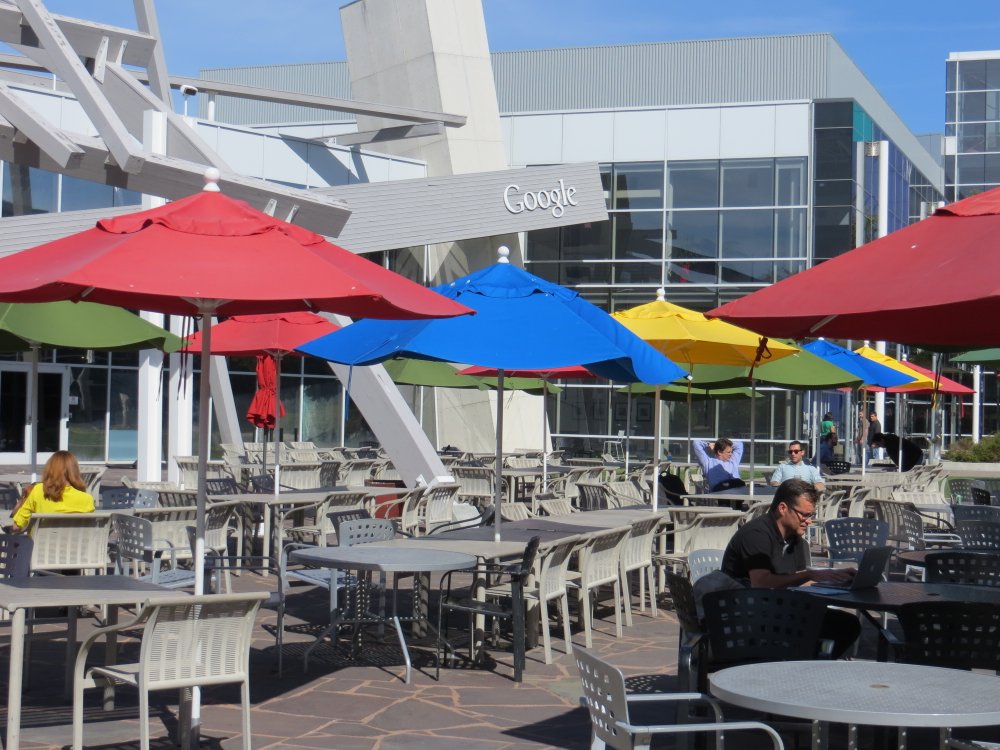
The Googleplex in Silicon Valley

The Googleplex in Silicon Valley

The Creative office park is the scaling of creative offices into a campus setting to emulate the campus experience achieved by cutting edge silicon valley technology companies like Google or Facebook. 

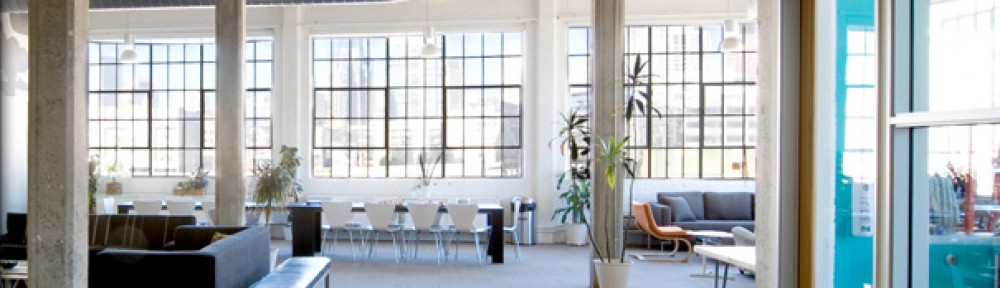
Creative office started in Los Angeles as the conversion of industrial buildings into office space while maintaining the industrial architectural features of the original space.  These features included the high exposed original ceilings (usually sandblasted), brick or concrete walls, and polished cement floors.  Posts, beams, steel, pipe were left all exposed.   The space was first used by artist and art galleries, architects and designers, then entertainment companies, then advertising firms, and finally technology companies.  The term morphed to include exposing the structural elements of any building by removing drywall and exposing the structural ceilings.

For a while, innovation in this area came from entertainment firms concerned with the architectural aesthetics of the space and how it would represent their artistic image.  Now innovation is coming from the technology area to allow higher densities and cool workplaces for their younger more tech savvy employees.  At first, artists defined the category followed by the artists in the entertainment industry.  Now, technology firms are defining the category, not only as a style but as a way of working in a more collaborative, dense, and amenity rich environment. 

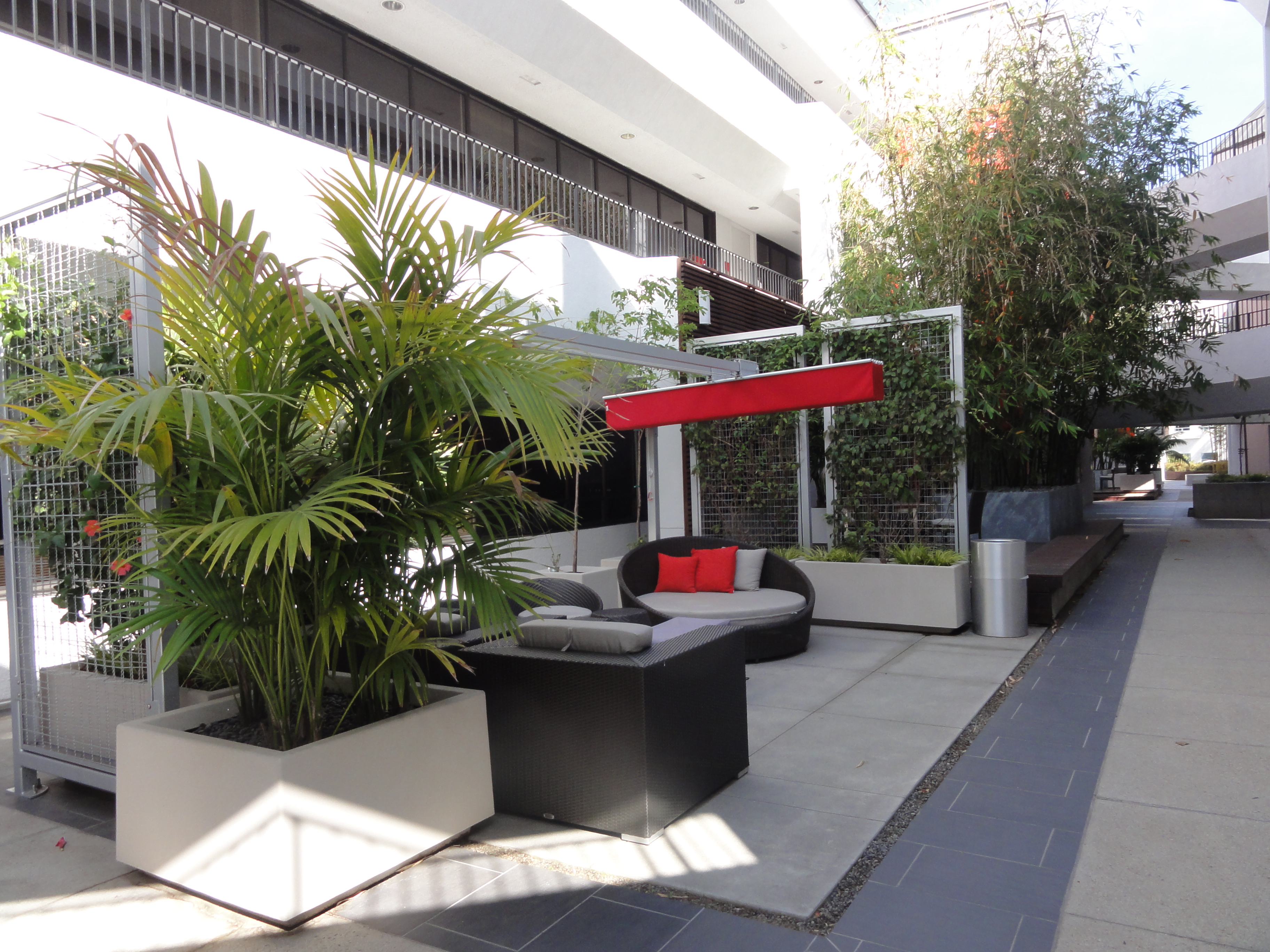
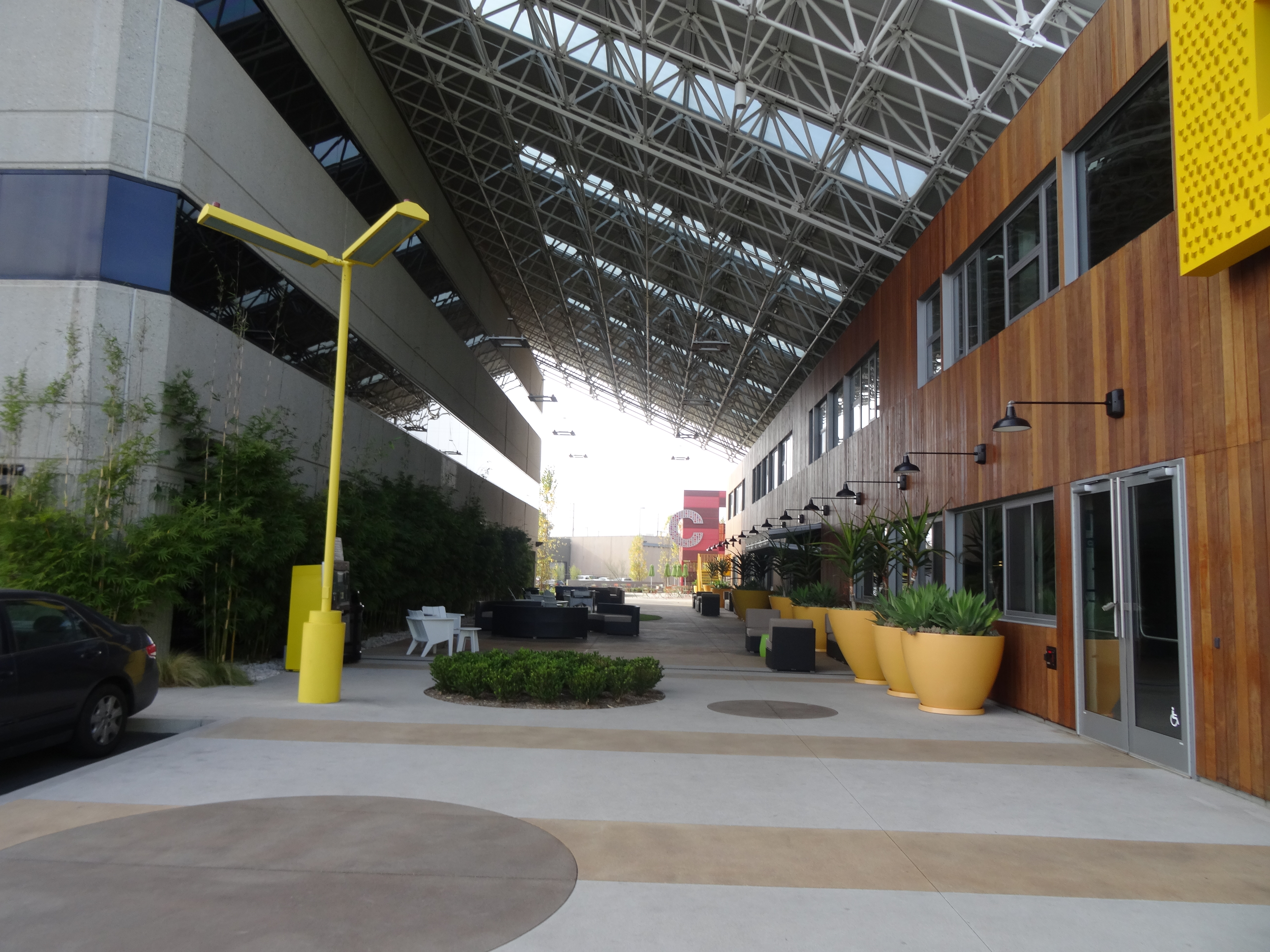
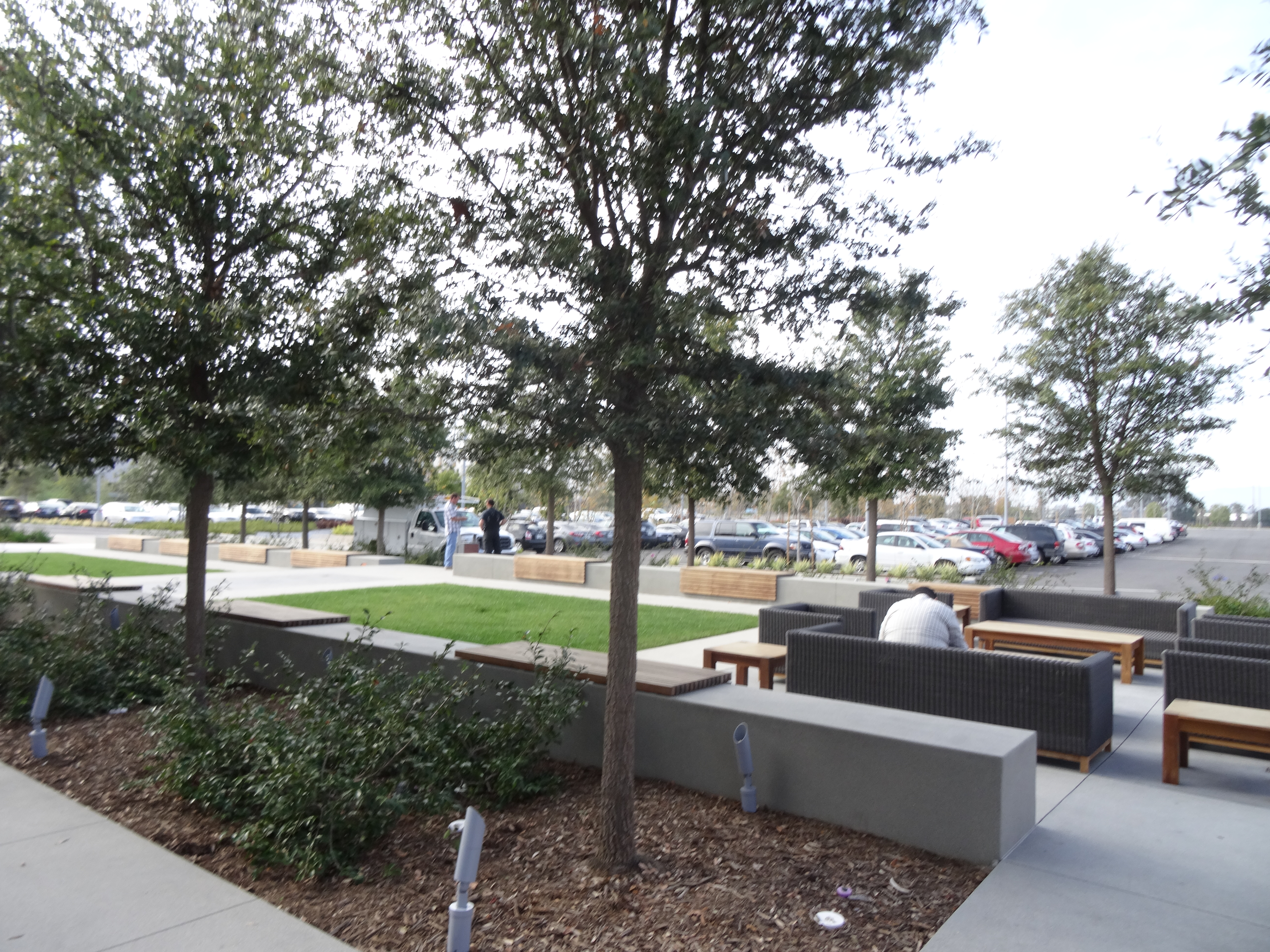
Creative office parks are grouping of creative office buildings that offer google-like outdoor collaboration space and amenities for the workers who work in the park.  These amenities may include gyms, volleyball courts, dog runs, vegetable gardens, bicycle storage and repair, cafes, and social areas that might be found on the roof of a W hotel.

Social Area at Olympic Media Campus, West Los Angeles

Social Area at Olympic Media Campus, West Los Angeles

Amphitheater and patio area at Google Venice

Amphitheater and patio area at Google Venice

Outdoor social area at Playa Jefferson, Playa Vista

Outdoor social area at Playa Jefferson, Playa Vista

Outdoor seating at Playa Jefferson Campus, Playa Vista

Outdoor seating at Playa Jefferson Campus, Playa Vista

More outdoor seating at Playa Jefferson Campus, Playa Vista

More outdoor seating at Playa Jefferson Campus, Playa Vista

Beach Volleyball Court at Lantana, Santa Monica

Beach Volleyball Court at Lantana, Santa Monica

Outdoor collaboration seating at the Reserve, Playa Vista

Outdoor collaboration seating at the Reserve, Playa Vista

Finding More Parking for Office Tenants

parking lot

It takes some creative thinking to find parking for office tenants in Los Angeles.  Despite the hope that office workers will take transit, most still drive.  Los Angeles office workers demand and covet convenient parking.  Many tenants today are looking to accommodate worker densities of four to five people per 1000 square feet. However, most buildings have parking of 3 per 1000 square feet or less.

The Over Park:  Many buildings with unreserved parking can offer parking at 3.6 per 1000 square feet even if the actual parking lot has only 3 spaces per 1000 square feet.  This anomoly results from what is called an “over park.”  Even in the most peak parking situation, only 80% of the people with parking spaces will use the parking at the same time.  The others are out of the office.  This allows the office building owner to sell more spaces that he actually has.  The key is to have unreserved versus reserved parking ..We have found it very difficult to shift tenants from reserve to unreserved parking even if you can offer them more parking passes as a result.

Valet:  In many cases, a valet can increase the number of parking spaces that can be sold.  To break  even, a valet must create an additional 35 to 45 spaces per valet. In a recent case, we saw two valets park 40 additional cars on a 60 car lot.

Automated Parking:  Several owners are turning to automated parking, although this is still rare and expensive.  It will probably require a valet to operate and require very stringent screening regulations.

Hustle and Search for Offsite Parking: The next technique is to hustle to find and lease offsite parking for tenants. Finding offsite parking  is becoming harder and harder.  However, as parking rates rise, more people will lease out under utilized day time parking  spaces.  In the case of our 10951 Pico office building, we approached the nearby mall for years to rent parking spaces on their lowest level.  We observed that nobody but mall employees parked on the lowest level during the weekday.  On entreaties fell on deaf ears for years.  Then the mall instituted an automated parking system which allowed them to identify what spaces were being used when and to better control who parked in their parking.  Based on this technology, the mall finally offered to lease our tenants offsite spaces.  Now we can offer almost unlimited parking to our tenants.

The problem in Los Angeles is that parking is a loss leader.  Tenants want not only convenient parking but they want subsidized parking.  Monthly parking rates would need to range from $200 to $300 per month to justify building parking garages.  In Los Angeles, parking rates range from $75 to $150 per month.

Owners must continue to find new offsite spaces.  What about apartment buildings whose tenants are away at work during the day.? Could this parking be used by office tenants during the day, and can residential tenants use office parking spaces at night?  Owners need to apply creativity and persistence to identify parking for their tenants.

Ich bin ein Creative Office

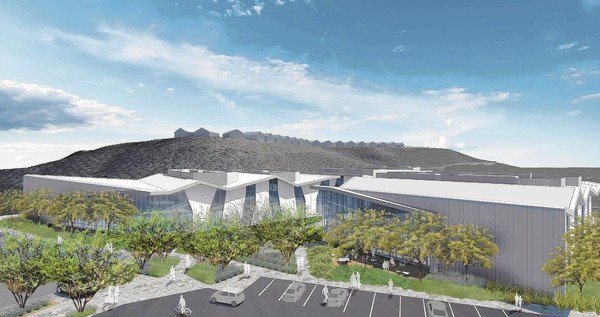
Rendering of Tishman's Creative Offices to be Built in Playa Vista

Rendering of Tishman’s Creative Offices to be Built in Playa Vista

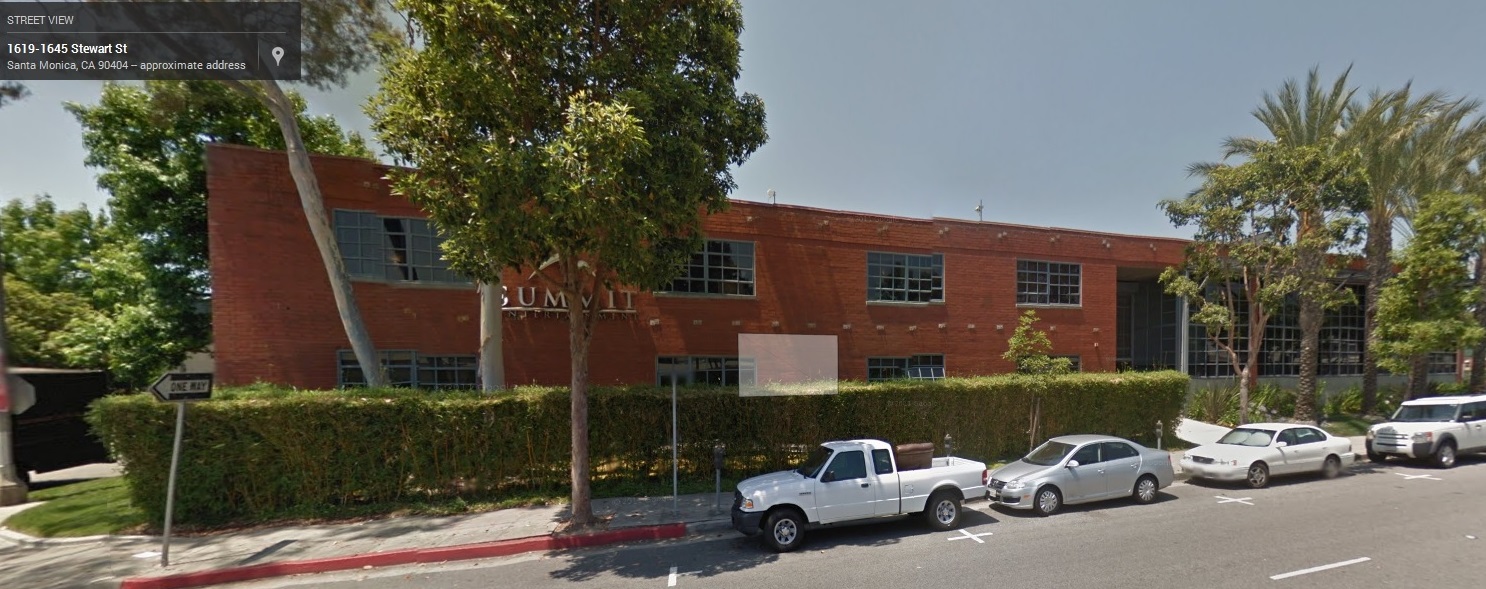
Compare to the Exterior of Penn Station, a warehouse PMI converted in Santa Monica

Compare to the Exterior of Penn Station, a warehouse PMI converted in Santa Monica

Creative office was once considered a fad or niche business.  Now it  is mainstream.  Creative office in Los Angeles was once the purview of small developers.  Now it is in the cross hairs of every major office investor and developer in Los Angeles:  Kilroy, Hudson, Lincoln, Legacy, Tishman,

One advantage of converting a warehouse was that you  could not replicate the aesthetics very easily into a newly constructed office building.  So in some sense, the renovated warehouse had superior bones than a newly built multistory office building.

Many of these developers are now creating creative office parks fraught with common area amenities from parks, dog walks, volley ball courts, fire pits, etc.  In the tradition of new office construction, these builders are use to focusing on creating a great common area experience while the aesthetics of the suite is just an empty shell, distinguished only by its window line and views and left to the discretion of the tenant.

In the original creative office, we focused more on creating a great authentic industrial experience within the suite.  Tishman now is going to try to create that same authentic experience of a converted warehouse in a newly constructed creative office building in Playa Vista.  Tishman boasts that the new buidings will have the same features as aconverted warehouses with ceiling as high as 24 feet (and maybe bow-trusses).  See the article below.

Developer to build five office buildings in Playa Vista – latimes.com.

Residents living near Expo Line stations reduce car use, study shows

expo line

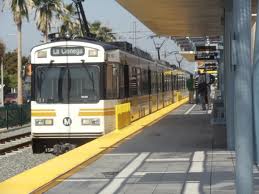
Here is some evidence that the Expo Line may be working.  One study finds that after the light-railed opened, Angelenos who lived within a half-mile of a station tripled their ridership and reduced their daily driving by 40% (see study below).

I had a second experience.  I parked in Culver City and took a relative to a show at the Los Angeles Convention Center.  On the way,  my relative declared that he does not take public transit and prefers to drive.  However, as a Laker fan, I have learned he now regularly parks in Culver City and takes the light rail to the Staples Center.  He even continued to do so after he once boarded the Blue Line on the way home by mistake.

At this point, most people I know use the light rail to ride and park in Culver City and take the Expo to the Staples Center.

Residents living near Expo Line stations reduce car use, study shows.

More Evidence of Creative Apartments

This blog from A Bisnow interview of josh Goldfarb of multihousing Adivors, SHOWS THE DESIRE OF A CREATIVE LOOK IN HOUSING BY MILLENNIALS.  A CREATIVE LOOK IN HOUSING  IS NO LONGER CONFINED TO ONLY UNITS WITH A MEZZANINE LOFT. “LOFT’ HAS BECOME CODE FOR EXPOSED BUILDING ELEMENTS THAT MAKE UP THE CORE COMPONENTS OF CREATIVE SPACE.  SOFT LOFTS ARE EXPOSING ELEMENTS IN NON-INDUSTRIAL TYPE BUILDINGS WITHOUT HIGH CEILINGS. SOME OF THESE SAME CREATIVE FEATURES CAN BE USED TO GIVE A LOFT LOOK TO EXISTING TRADITIONAL APARTMENTS.

FROM BISNOW:

“In the Southeast, like the rest of the country, development is hottest in infill locations surrounded by complementary uses like retail and office (meaning there’s no mad rush to the ‘burbs). Josh has noticed developers catering to two key demographics: Millennials and retirees. Millennials’ more efficient use of space means smaller units and supercharged amenities like all-over WiFi and a clubhouse for socializing. The older crowd agrees on amenities but may lean more traditional within the unit, Josh says, preferring more formal rooms (versus a loft space, above) that reflect how they grew up.”

Creative Spaces in Both Live and Work

Can be a creative office or a creative apartment

Can be a creative office or a creative apartment

The young workers who are attracted to creative office will also be attracted to the same design features in their apartments.  The same principals that make creative office popular in the work environment will also make creative multifamily popular in the housing environment. Exposing structural elements, creating indoor outdoor space, and raising ceilings will make otherwise boring apartments cool.   In Los Angeles, many are already attracted to loft living in Downtown, Venice, and Marina Del Rey.  Adding some  of the features in creative offices to the typical apartment units that predominate Los Angeles can turn boring and tired spaces into more interesting creative spaces.  Los Angeles apartments consists of popcorn or drywall ceilings and laminate and or carpeted floors.  Adding creative space elements will instill a different vibe.  The new features may include wood or concrete ceilings, glass roll up doors, brick or writable walls, and polished concrete floors.  Creative office and creative apartments will merge into a creative space movement.  The space will be useable for both live and work, (an apartfice).  Several start-ups have rented one apartment unit for the office and others for living and working in the same complex. These small start-ups use the space interchanageably–living, working, or both as needed.  Cool space is cool space.

The Rise in the Popularity of Headsets and Open Offices

earbuds

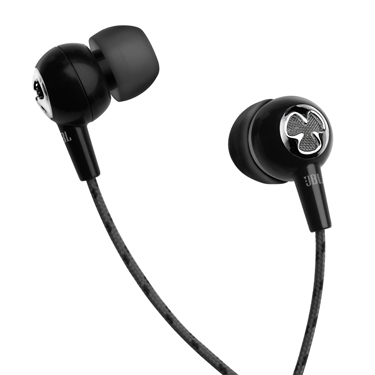
Open offices have become very popular. However, conversations or telephone calls can disturb open office users. Many open office users resort to headsets to create a quiet zone. The headphone market has exploded. Headphones and listening to white music can help the problem of noise interruption in an open office plan. Perhaps, headphones that are not complete noise cancelling are better since communication is still possible without needing the person to remove the headphones.  The open office plan allows for greater collaboration and density.  Headphones are the defacto  method that open space users use to deal with noise.  It may  be useful to tie the headsets into the phone system so workers can take calls on their headsets.   The headphones will become an integral tool in the open office plans and will be specifically designed for this use.  Do I see a joint venture between Dr. Dre and Herman Miller?