
Culver City Moves Aggressively to Attract Creative Office Firms with Innovative Redevelopment

Culver City is doing many things to make the city attractive to new businesses that would occupy creative offices.  The city is working with the Hayden Tract Property Owners Association to create 120 new parking spaces on the rail spur in the Hayden Tract.  These parking spaces will be just west of Stellar between Eastham and Hayden Avenue.  Recently, the city boldly moved at the end of January to pass three redevelopment properties that could benefit creative office tenants in the Hayden Tract.  For example,  Culver City committed to spend $5 million dollars to purchase 180 parking rights for public use in a new parking garage.  This garage is slated to be built on Higuera and Hayden by Hackman Properties. This garage will supplement a new 500 car garage at La Cienega and Jefferson recently completed by Cal Tran in conjunction with the opening of the Expo light rail later this year.  In addition, new street parking along National Boulevard between Washington and Jefferson has been added.  The Syd Krononthal Park at Eastham and National has received a new signal and a cross walk leading to it.  Not only will Culver City have an elevated Expo light rail station at La Cienega and Jefferson, but it will also have a similar station at Washington and Venice.  A new bike line and walking path will span the entire length of the light rail line.

Culver City is expected to build a pedestrian plaza and make landscape improvements around the station.  A temporary 600 car parking lot will be provided on the city’s land near the station as well.  The City also approved in late January an agreement with Lowe Development to sell this land parcel next to the Culver City light rail station so Lowe can build a development.  This future development area will have a mix of housing, office, retail and restaurant use.  These developments will be surrounding a large central open space amenity that will connect seamlessly with the new station.  In addition, the development will include 1,500 parking spaces, some of which will be for monthly rental to Hayden Tract owners and companies.

Close by, at Culver and Washington (9300 Washington), Culver City at the end of January committed to sell Hudson Realty and Combined Properties’ land to build a mixed use project. The proposed project includes ground-level retail, a four-story office building, and a grand stairway that leads pedestrians up to a restaurant pavilion.  There will also be a landscaped elevated plaza perched above the existing Town Square. The City in late January committed to sell land to build a new state of the art jazz club that will be operated by the Jazz Bakery.

The City has aggressively been courting new creative companies to locate in Culver City.  Unlike other Westside cities in Los Angeles, Culver City has displayed the ability to meet with companies and offer expedited permitting for their improvement.

Creative office  tenants appreciate Culver City for it’s rich urban experience. Culver City attracts young, knowledgeable workers due to the mix of chic restaurants, vibrant bar scene, new art district, the close proximity to affordable apartments, and easy access to Santa Monica, Hollywood, and Downtown Los Angeles.  Playa Vista, a competitve location for creative companies, lacks this rich urban experience.  In 2000, Culver City became a magnet for entertainment and internet companies fleeing the high rents of Santa Monica.  Culver City had a plentiful supply of architecturally attractive industrial buildings preferred by the creative types.  At the current time, however, Culver City is addressing the insufficient parking problem that many of these buildings have.

Culver City has a rich history of bold moves in redevelopment. It invested heavily in infrastructure and parking in its downtown district.  Culver City went so far as to build and own a multiplex theatre and Trader Joe’s in early 2000.  The current new developments come as no surprise from a city that is always in the forefront of innovation. Culver City has done an amazing job creating and executing the many improvements that will make it one of the prime locations to live, work, and play.

Stylespot Graduates from 10951 Pico Creative Penthouse Space

PMI’s former tenant Stylespot.com went from small offices to grand success in the past few years.  Stylespot helps consumers link celebrity photos with stores that sell the fashions worn by the celebutants.  Stylespot started in a 300 square foot office in PMI’s highly creative Penthouse suites, which resemble a New York Penthouse.  Stylespot informs visitors about what their favorite celebrities wore, where they can buy it, or how to get the look for less.  On their website, there are separate areas for visitors to shop for outfits specific celebrities have worn, a way to put a certain look together based on the designer or what celebrity fashionista vistors gravitate towards, and a way to discover the trends in pop culture fashion.

Stylespot, founded by Rafi Gordon and Alex Amin, was venture backed by Idealab when it was founded in 2009.  It has recently been acquired by Kaboodle, the online social shopping site owned by Hearst Corporation.  Kaboodle announced the acquisition late Friday, February 3rd.  Financial terms of the acquisition were not disclosed.   According to Kaboodle, Gordon and Amin will continue as co-CEOs of the company, operating as an individual website Kaboodle also said that its Chief Operating Officer, Steven Chien, will report to Gordon as part of the merger. Together, these two companies are now known as Image Network, Inc.  Gordon and Amin’s prior company was Baseline Research, which they sold to the New York Times Company in 2006.

Congratulations to Stylespot.  We wish them all the success.

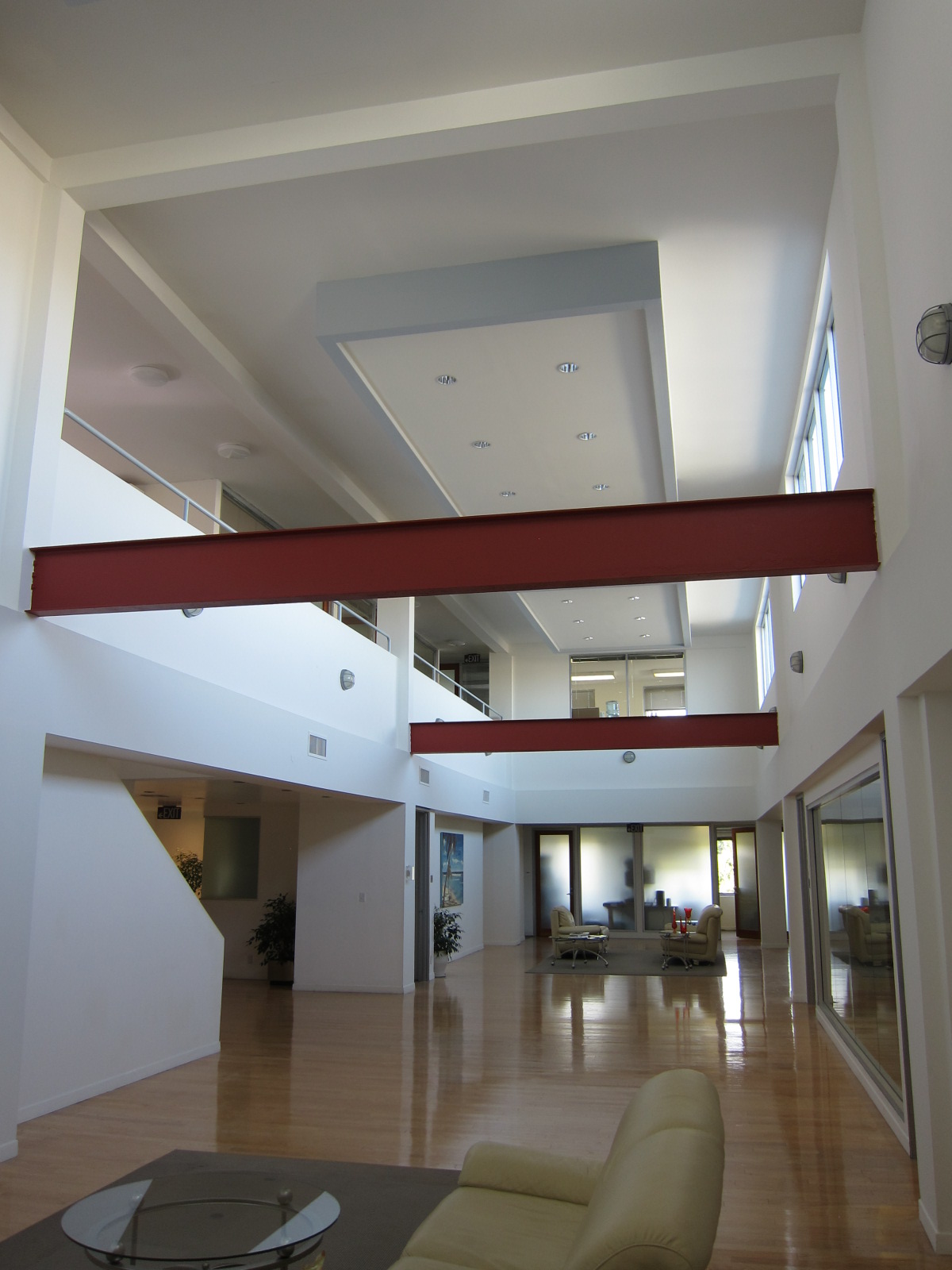
Inside view of 10951 Pico Building, where Stylespot grew from.

PMI has provided creative office space for many other successful startups in Los Angeles and San Francisco in their early phase. Some well known tenants include Twitter, Applied Semantics, Aperture and Playdom. Check out our full list of tenants in this article.

Bebo.com to Relocate Corporate HQ to PMI’s Creative Office Building in West Los Angeles

PMI Property is proud to announce that Bebo.com, the social networking website, signed a 2,000 square foot lease to relocate it’s headquarters to the creative office building at 10951 Pico Boulevard in West Los Angeles, California.

Bebo was catapulted onto the social networking scene and embraced by users in 2005.  It can be considered one of the first examples of creating a successful social networking site.  Unfortunately, Bebo was quickly overshadowed by MySpace.  Then Facebook launched, and the social networking revolution we all know today exploded.  AOL purchased Bebo in 2008 for $850 million and sold it to the current owners for under $10 million in 2010.  The original founder Michael Birch netted $300 million on the deal after investing $8,000 to start Bebo.  The current owners operate Bebo as an international social meeting website, and it boasts over 400,000 unique visitors a month in the United States alone.  Bebo still has to compete with the giant of the social networking game: Facebook, with their 140 million unique monthly visitors.  In contrast, Friendster is down to 77,000 users a month.

But Bebo survived, and has fared well in comparison to other sites. They feature personal profile pages for users where they can post blogs, photos, music and videos, as well as online gaming.  Be sure to check out our new tenant, Bebo to see what they have to offer!

You can read more about Bebo.com here.

Loss of L.A. Art & Entertainment Jobs Explains Sluggish Westside Creative Market–But Digital Tech Continues to Surge On

The Otis College of Art and Design commissioned a report for 2010 which was compiled by the Los Angeles County Economic Development Corporation.  The report shows a loss of 80,000 jobs in Los Angeles creative industries from 2007 to 2010.  Only digital media employment managed to remain steady over the same period.  Since creative workers occupy creative office, these statistics explain the absorption losses in L.A.’s Westside creative office market.

What about 2011?  Our calculation of the Los Angeles creative industries (excluding informational services) reveals a gain of only 1,200 jobs from November 2010 to November 2011.  This percentage gain, under one half of one percent, corresponds to the sluggish leasing recovery in the greater Westside creative office buildings.  In constrast, information services alone gained 5,200 jobs– an increase of over 65%.  This job explosion in digital technology has translated to a surging demand for creative office space, so far primarily in Santa Monica.

This article by Mike Boehm of The Los Angeles Times lays out all the findings of the Otis Report on the Creative Economy of Los Angeles and Orange Counties: LA Creative Jobs, LA Times Dec 20 2011.

The Affordable Housing Dilemma in Los Angeles

The market for affordable rental properties in the greater Los Angeles area has become a tricky question with an increasingly problematic solution.  If you are lucky enough to get a tip about a reasonably priced dwelling, chances are hundreds of other people did too– and you might just be too late.  The demand for affordable housing in Los Angeles outweighs the quantity that is actually available. The lack of sensibly priced rental properties has become somewhat precarious for residents.  Some people are going to extreme measures to provide what they consider as affordable housing.  One the other hand, some disagree that these properties are too small and crowded.  They feel that the landlords of these buildings are walking the line of illegal and immoral activities.  Hopefully the L.A. Housing Authority will step in and prevent this from happening again.

There are people taking the lack of space in Los Angeles to a whole new level. A person converted a single family home into multiple apartments where 44 people lived for rents as high as $500 per month.  This article explains the situation that occurred in South Los Angeles.  Check it out to read the entire story from the L.A. Times.

Tech Start-ups Flock to L.A.’s ‘Silicon Beach’

Tech is quickly spreading profusely over Los Angeles.  Northern California is no longer the only place where up and coming tech, web, and new media companies are calling home.  The L.A. Times recently published an article detailing companies and new tech start-ups who have made chosen “Silicon Beach” over “Silicon Valley.”

Some start-ups are also searching for suites in Los Angeles that are flexible and easy to remodel to fit their needs as a company.  One major tenant broker reported a flurry of requirements for companies that produce video content for the web.  PMI has received interest from a few companies that require building several of these web video studios.  PMI is trying to figure out how to best accommodate these needs by making the restoration of the space less expensive.  The companies who are requesting restoration believe that the renovated studio will have additional value for the next company who will occupy it.  However, in the event that the next company does not prefer the modifications previously made– maybe they are involved with a different type of business– the company will want the web video studio layout removed.  Adding to the complexity of the situation, these companies also have different studio requirements; there isn’t an adequate generic standard these studios can be crafted by.

PMI is working to accomdate all of their tenant’s requests, and are happy to welcome new and creative companies at their properties.  With the creation of Silicon Beach, we expect the creative office space demand to rise even further.

Santa Monica Opens Nation’s Largest Bike Parking Center

Bicycle parking across our 1460 4th Street building in Santa Monica. Photo: LA Metro

PMI recently started a program in San Francisco where we arranged bike parking for our tenant’s employees near the BART and Caltrain.  People can park their bikes overnight in participating garages and retrieve them in the morning after arriving in the city on their transit of choice.  Then they can continue the rest of the distance to work on their bike.  This eliminates the hassle of transporting a bicycle everyday.

The trend seems to be continuing in Los Angeles with the creation of an over 5,000 square foot bicycle garage in Santa Monica.  People that choose this alternative way to commute now have a state of the art facility that includes showers, lockers, restrooms, and an area to repair bicyles.  Our 1460 4th Street building in downtown Santa Monica is conveniently located right around the corner from the facility and we are excited to have this amazing addition close by for our tenants to utilize.

Transportation Nation outlines all the details in their article here.